

 0
0

Choosing a fintech development partner is not the same as hiring a general software team. In fintech, a weak partner can create security gaps, compliance exposure, launch delays, failed audits, and expensive rework. A polished sales deck does not reduce those risks. Evidence does.
The strongest due diligence process tests whether a vendor can build securely, ship on time, work within regulatory constraints, and support the product after launch. It should be structured, documented, and hard to bluff.
A poor review process usually leads to the same outcomes:
- audit risk
- unstable releases
- hidden delivery bottlenecks
- vendor lock-in
- rising remediation cost
WHAT'S IN THE ARTICLE
- 01Why fintech development partner due diligence carries higher stakes
- 02Fintech due diligence checklist for hiring a development partner
- 03How to validate fintech technical expertise and architecture
- 04How to assess fintech security and compliance maturity
- 05How to verify portfolio claims and reference quality
- 06How to review team stability, financial health, and delivery model
- 07How to structure fintech contracts, IP ownership, and exit rights
- 08How to use vendor websites and pilot projects during due diligence
- 09Conclusion
Why fintech development partner due diligence carries higher stakes
Fintech products handle money, identity data, payment credentials, transaction records, and sensitive customer behavior. That changes the standard for partner selection. A mobile app defect in social media may frustrate users. A defect in a lending, payments, wealth, or insurance platform can trigger fraud exposure, reporting failures, or a compliance event.
The delivery environment is also more demanding. Teams often need to work with payment gateways, banking APIs, KYC and AML workflows, ledger logic, audit trails, strong authentication, and strict data retention rules. Even when a third-party platform handles part of the regulated function, the product team still owns risk across the full customer experience.
That is why due diligence should cover more than technical skill. You are assessing operational discipline, security maturity, governance, communication quality, and commercial reliability.
Fintech due diligence checklist for hiring a development partner
A practical review framework helps teams compare vendors on the same basis. Instead of relying on general impressions, score each vendor against the same categories and ask for the same evidence.
| Due diligence area | What to verify | Evidence to request |
| Technical expertise | Relevant stack, architecture choices, cloud and DevOps maturity, scaling experience | Architecture samples, code samples, CI/CD demo, lead engineer interviews |
| Security and compliance | Experience with GDPR, PCI DSS, PSD2/Open Banking, AML/KYC, secure SDLC | Security policies, audit reports, certifications, pentest summaries, incident response plan |
| Portfolio and results | Similar fintech work, product complexity, measurable outcomes | Case studies, product screenshots, references, outcome metrics tied to business goals |
| Team quality | Seniority mix, key roles, turnover, in-house vs subcontractors | Named team roster, CVs or profiles, staffing plan, substitution policy |
| Financial and legal health | Stability, years in business, litigation history, insurance | Company registration, financial summary, insurance certificates, legal disclosures |
| Delivery management | Sprint process, reporting, scope control, release discipline | Sample status reports, backlog structure, demo cadence, change request process |
| IP and contract terms | Ownership, confidentiality, liability, handover rights | MSA, SOW, DPA, IP assignment clauses, exit and transition terms |
| Cultural fit | Communication style, timezone overlap, decision speed, transparency | Trial workshops, team interviews, workshop participation, governance meetings |
A scorecard like this makes trade-offs visible. A low-cost vendor may still be the highest-risk option if security evidence is weak or if key staff are unnamed.

Looking to Build an MVP without worries about strategy planning?
EVNE Developers is a dedicated software development team with a product mindset.
We’ll be happy to help you turn your idea into life and successfully monetize it.
How to validate fintech technical expertise and architecture
Start with the basics: does the partner have real experience with the stack your product needs? In fintech, strong back-end choices often include Python, Java, C#, or C++, while front-end teams commonly work in React or Angular. The exact stack matters less than the team’s depth with it in production environments.
Ask for proof that goes beyond a technology list on a website. Review sanitized code samples. Ask the lead engineer to walk through a real architecture decision, including trade-offs around latency, fault tolerance, observability, and data consistency. If your product includes high transaction volume, real-time risk scoring, or complex reporting, ask how those workloads were handled on previous projects.
A live DevOps walkthrough is often more revealing than a pitch call. You want to see how code moves from commit to deployment, how tests run, what monitoring exists, and how rollback works if a release fails. Fintech teams should be comfortable discussing release controls, environment separation, secrets management, and infrastructure automation.
A paid pilot can shorten the distance between claims and proof. Instead of signing a large contract immediately, assign a focused task: an architecture spike, a secure onboarding flow, a transaction reporting module, or a third-party API integration. That gives you direct data on code quality, speed, communication, and documentation.
How to assess fintech security and compliance maturity
Security claims are easy to make and harder to verify. In fintech, verification is the job.
Ask the vendor which compliance standards and frameworks they have worked with, and in what capacity. A team building a payment feature should be able to speak clearly about PCI DSS boundaries. A team supporting European customer data should be comfortable discussing GDPR data handling. If the product touches account access or payment initiation, knowledge of PSD2 and Open Banking obligations matters. If onboarding includes identity checks, AML and KYC process awareness matters too.
Then go deeper into operating controls. Ask how they handle encryption in transit and at rest, access management, logging, audit trails, vulnerability scanning, secrets rotation, backup policies, and incident response. Ask whether they run secure code reviews, dependency scanning, penetration tests, and OWASP-based validation.
In fintech, “we follow best practices” is not evidence.
Look for documentation and third-party proof where available. Useful signals include ISO 27001, SOC 2, PCI-related assessments, internal security policies, and recent pentest findings with remediation notes. If a vendor cannot provide exact certificates because of confidentiality, they should still be able to share controlled summaries, policy excerpts, or audit scope details.
Also test how well they think under pressure. Present a scenario: suspicious login activity, a payment webhook failure, or a suspected data exposure in a staging environment. A mature partner should explain the response path, escalation owner, containment steps, customer impact review, and post-incident remediation.
How to verify portfolio claims and reference quality
Case studies can help, but they are marketing assets first. Treat them as a starting point, not a verdict. A useful fintech case study should show product scope, timeline, team composition, stack, integration complexity, and business outcomes. If a vendor claims user growth, retention gains, transaction growth, or conversion uplift, ask how those results were measured and what part of the outcome the development team directly influenced.
Reference checks are where marketing language gets tested. Speak with at least three former clients if possible, and do not rely only on contacts handpicked by the vendor. Try to identify references from public case studies, event panels, or mutual networks.
When you run those calls, focus on patterns:
- Delivery accuracy: Did the partner stay close to the planned timeline and budget?
- Scope control: Were change requests handled clearly or did costs drift without discipline?
- Quality of output: How stable was the product after release?
- Team consistency: Did key engineers stay on the project?
- Problem response: How did the partner act when issues appeared?
- Rehire signal: Would the client choose the same partner again?
A single glowing testimonial tells you very little. Repeated comments about strong communication, disciplined delivery, or weak documentation tell you a lot.

Proving the Concept for FinTech Startup with a Smart Algorithm for Detecting Subscriptions
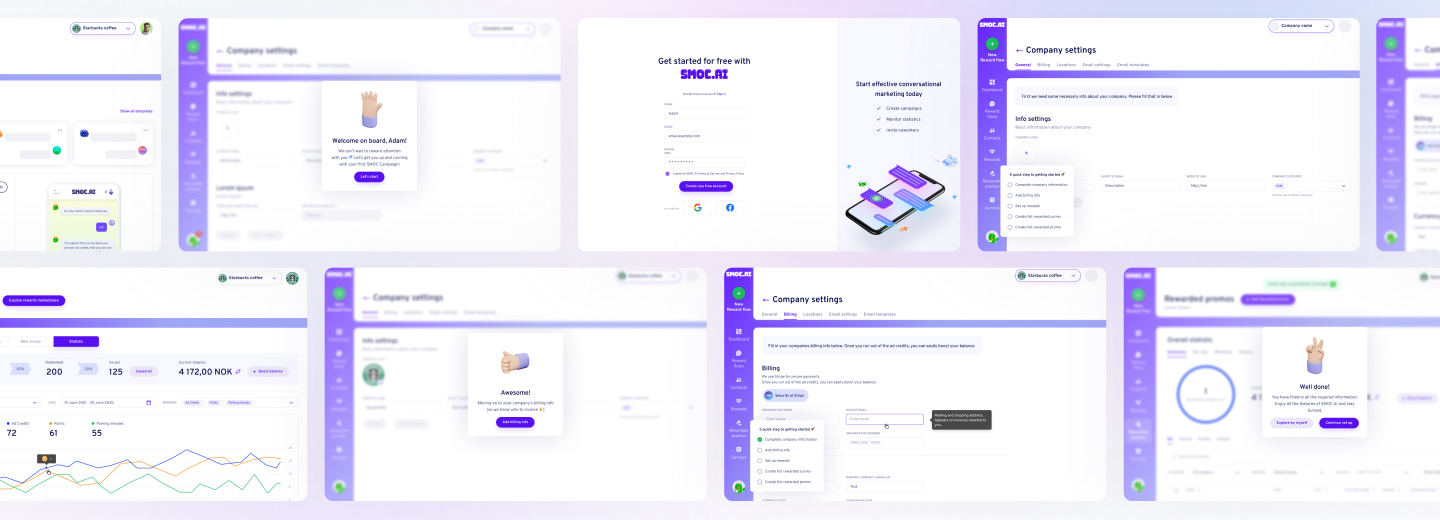
Scaling from Prototype into a User-Friendly and Conversational Marketing Platform
How to review team stability, financial health, and delivery model
Ask who will actually work on the project, not just who joins the sales call. Request a named team structure with roles, seniority, and availability. For critical positions, including solution architect, project manager, QA lead, DevOps engineer, and security specialist, ask for profile summaries and relevant project history.
Turnover deserves direct attention. If a vendor loses engineers frequently, the product pays the price through knowledge loss and slower delivery. Ask what happens when a core engineer leaves, how handover works, and whether you have approval rights over replacements. Also ask what percentage of the team is in-house versus subcontracted.
Financial and legal checks matter too. A vendor under strain may cut corners, delay staffing, or struggle to retain talent. Request a business summary that covers years in operation, current scale, liability insurance, and any material legal disputes. In larger engagements, a financial review or credit check may be reasonable.
Delivery model should also be clear. How many overlapping working hours will your teams share? Who owns backlog priorities? How often will you see demos? Who can make scope decisions? Small process gaps early in the relationship often become expensive friction later.
How to structure fintech contracts, IP ownership, and exit rights
The contract should remove ambiguity, not create it. Start with the statement of work. Scope, milestones, acceptance criteria, assumptions, and payment terms should be specific enough that both sides can tell whether work is complete. Vague language creates conflict, especially once timelines slip or priorities shift.
Intellectual property terms need special care. The agreement should state that all code, designs, documentation, test assets, and related work product created for your project become your property under the agreed payment terms. That definition should be broad enough to include drafts, architecture artifacts, and custom integration logic. If subcontractors are involved, the contract should require clean IP assignment from them as well.
Data protection terms should be equally clear. Include confidentiality obligations, data handling requirements, breach notification timelines, access restrictions, return or deletion of data on termination, and any needed data processing addendum. If the partner will touch production data, make sure roles and responsibilities are explicit.
Liability and exit clauses often get rushed, which is a mistake. For fintech products, you should negotiate strong protections around data breaches, IP infringement, and security failures. If the relationship ends, you need source code access, documentation, infrastructure knowledge transfer, credential handoff, and a defined transition support period. For high-risk products, source code escrow may also be worth considering.
How to use vendor websites and pilot projects during due diligence
A vendor website is useful, but it is not neutral. It shows how that company presents its strengths, selected projects, and preferred industries. That can help you screen for relevance. It cannot replace independent verification.
Review the site for practical signals: recent case studies, named industries, visible delivery capabilities, published tech focus, team size claims, and content freshness. If a website shows fintech projects, compliance language, and measurable results, add those points to your question list. Then verify them through calls, documents, and references.
This applies to any company site, including a site you may already know from earlier research. Self-published testimonials, client logos, and delivery metrics can be useful prompts. They are still self-reported.
Pilot projects are where website claims meet real execution. A short paid engagement can show how the team communicates, documents decisions, estimates work, handles security review comments, and responds when requirements shift. Those signals are often more useful than a long proposal.

Need Checking What Your Product Market is Able to Offer?
EVNE Developers is a dedicated software development team with a product mindset.
We’ll be happy to help you turn your idea into life and successfully monetize it.
Conclusion
Due diligence does not stop at signature. In regulated products, vendor oversight should continue through the full relationship.
Set operating metrics early. Common examples include sprint predictability, lead time, escaped defects, test coverage trends, release frequency, uptime, incident response times, and security issue remediation speed. If the engagement is tied to business goals, track those too: onboarding completion, payment success rate, loan decision time, or retention after release.
Governance matters just as much as metrics. Weekly delivery reviews, monthly operational reviews, and quarterly risk reviews give both sides a structured way to catch issues early. Keep access logs, release notes, architecture decisions, and compliance evidence organized from day one.
The best fintech development partners do not resist this level of scrutiny. They expect it, prepare for it, and work better because of it.
Due diligence helps you assess a partner’s technical expertise, security standards, regulatory compliance, and track record. This minimizes risks and ensures your project’s success.
Focus on the partner’s experience in fintech, portfolio of similar projects, security protocols, compliance with financial regulations, development methodologies, and client references.
Request documentation of their compliance certifications (e.g., PCI DSS, GDPR), review their data handling policies, and confirm their understanding of relevant financial regulations in your target markets.
Be cautious of partners with vague answers, lack of relevant experience, poor communication, no clear security protocols, or reluctance to provide references.

About author
Roman Bondarenko is the CEO of EVNE Developers. He is an expert in software development and technological entrepreneurship and has 10+years of experience in digital transformation consulting in Healthcare, FinTech, Supply Chain and Logistics.
Author | CEO EVNE Developers