

 0
0

Product-market fit changes the engineering conversation. Before PMF, most startups can tolerate a lot of delivery mess. A few manual deploys, one overworked DevOps-minded engineer, scattered scripts, inconsistent environments, and tribal knowledge are often enough to keep momentum alive. Speed matters more than polish when the product itself is still being proven.
After PMF, that equation breaks. More customers, more engineers, more services, more compliance pressure, and higher release volume expose the cost of ad hoc delivery. Teams start missing dates not because they lack ideas, but because shipping software becomes harder every quarter.
That is why platform engineering has become a hot topic for startups and scale-ups that are past the earliest stage.
WHAT'S IN THE ARTICLE
- 01Why platform engineering becomes urgent after product-market fit
- 02What internal developer platforms actually include
- 03Why developer experience changes delivery economics
- 04How CI/CD standardization reduces delivery drag
- 05How security guardrails support faster software delivery
- 06Why observability and shared standards matter more as teams grow
- 07Platform engineering metrics that matter to startups and scale-ups
- 08How to roll out platform engineering without overbuilding
- 09Conclusion
Why platform engineering becomes urgent after product-market fit
Once a product has a clear market, the main challenge shifts from “can we build this?” to “can we keep delivering fast without breaking the business?” New teams come in. The architecture expands. Security reviews take longer. Environments drift. Release coordination becomes a weekly tax on engineering time.
At that stage, platform engineering stops sounding like a big-company idea and starts looking like basic operating discipline. DORA’s 2024 research describes platform engineering as building and operating internal development platforms to streamline processes and improve efficiency. The key point is not tooling for its own sake. It is a product approach to internal delivery systems that helps developers work with more independence and less friction.
That matters because post-PMF startups are no longer optimizing for a heroic engineering culture. They are optimizing for repeatable delivery.
A common pattern is easy to spot: the product team wants to launch faster, but engineering capacity gets absorbed by deployment issues, cloud complexity, access requests, environment setup, security checks, and inconsistent observability.
After a while, these issues show up in business metrics. The signals are as follows:
- New engineers need days or weeks to become productive
- Release quality depends on a few senior team members
- Security review happens late and blocks launches
- CI/CD behavior varies by team, repo, or service
- Cloud costs rise while delivery speed stalls
- Incidents take too long to diagnose because logs, metrics, and traces are fragmented
What internal developer platforms actually include
An internal developer platform is not just a Kubernetes layer with a portal on top. At its best, it is a set of standardized workflows, templates, automation, and guardrails that reduce repeated engineering work.
DORA’s recent guidance is useful here because it frames platform engineering as a user-centered practice. The users are developers. The platform should make the preferred way of building, testing, deploying, and monitoring software the easiest way.
That is a major shift for growing startups. Instead of every squad making local decisions about pipelines, infrastructure patterns, access controls, and observability, the platform creates a paved road. Teams still have flexibility, but the defaults are stronger.
Here is what that change often looks like in practice:
| Area | Ad hoc post-PMF setup | Platform engineering approach |
| Environments | Manually configured, inconsistent | Standardized dev, staging, and production environments |
| CI/CD | Repo-specific scripts and manual exceptions | Shared continuous delivery pipeline templates |
| Security | Late-stage review, ticket-driven approvals | Policy guardrails embedded into delivery workflows |
| Observability | Different tools and naming conventions | Common logging, metrics, tracing, and alerting standards |
| Developer onboarding | Knowledge passed person to person | Self-service setup, templates, and documentation |
| Infrastructure | Team-by-team choices | Approved patterns with room for justified exceptions |
Internal platforms are especially useful when a business operates across multiple services, teams, or regulated workflows. That is where standardization and interoperability stop being technical preferences and become necessary for delivery at scale.

Looking to Build an MVP without worries about strategy planning?
EVNE Developers is a dedicated software development team with a product mindset.
We’ll be happy to help you turn your idea into life and successfully monetize it.
Why developer experience changes delivery economics
Developer experience can sound soft until it is attached to cost, lead time, and retention. If a team spends too much time waiting for environments, fixing pipelines, hunting down cloud permissions, or reverse-engineering deployment rules, that time comes out of feature delivery. It also pushes senior engineers into support work that does not compound.
Good platform engineering improves developer experience by reducing repetitive friction. DORA’s 2024 report links internal development platforms with increased developer productivity, and it emphasizes developer independence as a design goal. That point is easy to underestimate. Independence means fewer blockers, less ticket ping-pong, and less dependence on a small group of specialists.
It also helps hiring scale. Post-PMF companies rarely want onboarding to depend on a single staff engineer walking every new hire through local setup, deployment rules, and cloud conventions.
When the platform is treated like a product, onboarding gets shorter, engineering standards become visible, and team output becomes less uneven. A strong developer experience usually includes:
- Fast local setup
- Clear service templates
- Repeatable pipeline behavior
- Standard observability defaults
- Simple access paths
- Documentation people actually use
How CI/CD standardization reduces delivery drag
CI/CD standardization is often the fastest way to make platform engineering real. Many startups already have automation, but it has grown repo by repo and team by team. One service has good tests, another skips security checks, another deploys differently based on who is on call, and another still relies on manual release steps. This creates hidden variation, and hidden variation is expensive.
Standardized pipelines solve that. They give teams a shared build, test, scan, deploy, and rollback model while still allowing service-level differences where they matter. That reduces avoidable failure and makes lead time more predictable.
This is where platform engineering connects directly to business outcomes. Release speed is not just about more automation. It is about fewer exceptions, fewer handoffs, and fewer last-minute surprises. A practical standardized pipeline often covers:
- source control triggers
- automated test gates
- artifact versioning
- dependency and container scanning
- infrastructure validation
- staged rollout and rollback paths
- deployment audit history
There is real evidence behind the value of this approach. In one EVNE Developers case, a cloud platform for donations was set up with separate Dev, Staging, and Production environments plus an automated continuous delivery pipeline. The reported outcomes included 95% less downtime due to cloud, 15,000 new users in three months, and 60% newcomer retention. The lesson is not that every startup needs the same stack. It is that disciplined delivery systems can support both reliability and growth.

Proving the Concept for FinTech Startup with a Smart Algorithm for Detecting Subscriptions
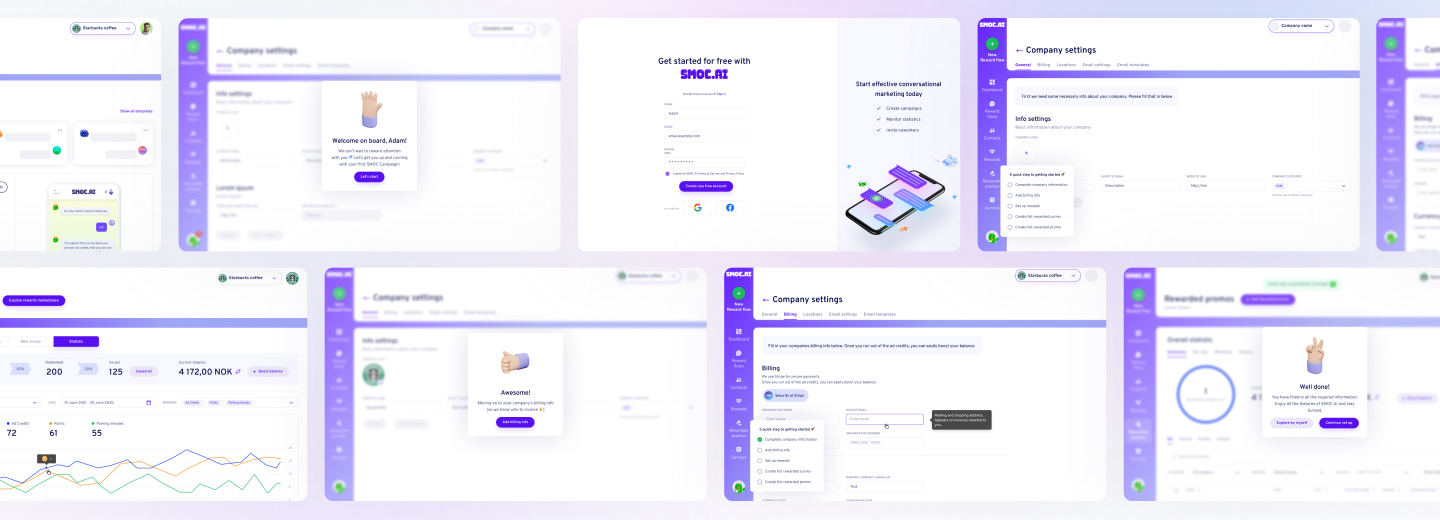
Scaling from Prototype into a User-Friendly and Conversational Marketing Platform
How security guardrails support faster software delivery
Security is one reason platform engineering is moving from nice-to-have to urgent priority. The CNCF’s 2024 ecosystem gaps research, based on input from more than 300 cloud-native developers, highlighted recurring concerns in security, cost management, skills, complexity, standardization and interoperability, and observability. Those categories map closely to what growing product teams struggle with after PMF.
The security point stands out. Traditional security methods do not hold up well in multi-cluster environments and multi-cloud setups. If every team manages policies differently, risk goes up and release speed goes down because review and remediation happen too late.
Guardrails work better than one-off policing. Good guardrails make secure delivery the default path, not an extra process. That usually means baking security into templates, CI/CD, and infrastructure standards rather than relying on manual checks right before launch. Guardrail types are usually as follows:
- Secret scanning in pull requests
- Dependency and container vulnerability checks in the pipeline
- Least-privilege access patterns by default
- Approved infrastructure modules with policy checks
- Audit-friendly deployment logs
- Standard backup, recovery, and incident response workflows
This is especially relevant for fintech, healthcare, insurance, and other regulated domains, where compliance pressure tends to hit hard once customer growth accelerates. A product-first team should not wait until audits or enterprise deals force a scramble. Platform engineering gives security and compliance a delivery model, not just a policy document.
Why observability and shared standards matter more as teams grow
As systems become more distributed, debugging gets slower unless observability is standardized early enough. A startup with one app and one delivery squad can live with patchy logs and some manual tracing. A scale-up with multiple services, integrations, and customer-facing uptime expectations cannot. When incidents happen, teams need a common language for telemetry, alerts, dashboards, and ownership.
This is another area where platform engineering helps because it reduces variance. Shared naming standards, required health checks, centralized logs, baseline dashboards, and service-level alert patterns shorten the time between issue detection and issue resolution.
Observability is also a management tool. Leaders cannot improve delivery if they lack real-time visibility into release flow, system health, incident patterns, and bottlenecks. In a separate EVNE case involving an ESG reporting platform, modular microservices and two-week delivery sprints supported high availability, horizontal scalability, and updates without downtime, while the client reportedly had 100% real-time visibility into development velocity, sprint backlogs, and budget use. That combination matters. Delivery speed is more valuable when leadership can see what is happening and make decisions earlier.
Platform engineering metrics that matter to startups and scale-ups
The wrong way to approach platform engineering is to build an internal platform team and then search for a problem to justify it. The better approach is to start with measurable delivery issues and define the platform around them. This fits a product-first mindset because the platform itself should be validated against business outcomes, not feature output.
Useful metrics include:
- Lead time: Time from code commit to production
- Deployment frequency: How often teams release safely
- Change failure rate: Share of releases that cause incidents or rollback
- Mean time to recovery: How quickly incidents are contained and fixed
- Onboarding time: Days until a new developer ships useful code
- Platform adoption: Percentage of teams using standard pipelines and templates
- Developer satisfaction: Whether the paved road is actually easier than the custom path
If these metrics do not move, the platform is not doing its job. That is one reason DORA emphasizes user-centered design. Internal platforms fail when they are architected around internal preferences instead of developer needs. The strongest platforms reduce cognitive load, shorten wait states, and remove repeated work without locking teams into clumsy abstractions.
How to roll out platform engineering without overbuilding
Post-PMF startups do not need to build a giant platform program on day one. They need to remove the highest-friction delivery problems first. A practical rollout usually starts with shared CI/CD templates, environment standardization, observability defaults, and security checks embedded into pipelines. Those changes tend to produce visible gains quickly because they cut manual effort across many teams at once.
After that, the next layer is self-service. Service templates, infrastructure modules, onboarding guides, access workflows, and deployment patterns help developers move faster without opening more support tickets. This is where a product development partner with strong delivery operations can add value, because the goal is not just to install tools. The goal is to build a usable operating model around them.
A lean rollout often follows this sequence:
- Map friction: Identify release blockers, onboarding delays, incident patterns, and compliance gaps
- Standardize the basics: Create shared environments, CI/CD pipelines, and observability conventions
- Add guardrails: Move security and policy checks into default workflows
- Measure adoption and outcomes: Track delivery, quality, and developer productivity metrics
- Expand carefully: Add self-service features only where they remove proven bottlenecks
This is also why platform engineering should not be isolated from product planning. If the company is scaling a SaaS product, entering regulated markets, rescuing a troubled delivery program, or migrating to cloud-native architecture, the platform work should support those commercial goals directly.
For startups that have crossed the PMF line, platform engineering is less about trend adoption and more about preserving speed as complexity rises. The companies that get it right tend to treat internal platforms the same way they treat customer-facing products: define users, remove friction, ship in increments, and measure what changes.

Need Checking What Your Product Market is Able to Offer?
EVNE Developers is a dedicated software development team with a product mindset.
We’ll be happy to help you turn your idea into life and successfully monetize it.
Conclusion
As startups move beyond product-market fit, the challenges of scaling software delivery, maintaining velocity, and ensuring security become more acute. Platform engineering, with its focus on building robust internal developer platforms, is emerging as a critical enabler for these growth-stage companies. By standardizing CI/CD pipelines, implementing security guardrails, and prioritizing developer experience, organizations can empower their teams to deliver features faster, reduce operational overhead, and maintain high-quality standards. Ultimately, investing in platform engineering is not just a technical decision; it’s a strategic move that drives measurable business outcomes, supports team scalability, and sustains competitive advantage in fast-moving markets.
Platform engineering is the discipline of designing, building, and maintaining internal platforms that streamline software delivery, automate infrastructure, and improve developer experience. These platforms provide standardized tools, workflows, and environments to help engineering teams deliver software more efficiently and securely.
After achieving product-market fit, startups need to scale rapidly without sacrificing quality or security. Platform engineering helps by reducing bottlenecks, standardizing processes, and enabling teams to focus on delivering value rather than managing infrastructure.
By providing self-service tools, automated workflows, and clear documentation, platform engineering removes friction from the development process. Developers spend less time on repetitive tasks and more time building features, leading to higher productivity and job satisfaction.
A well-designed internal platform accelerates time-to-market, reduces operational costs, and minimizes risks. This enables startups and scale-ups to respond quickly to customer needs, iterate on products faster, and maintain a strong competitive edge.

About author
Roman Bondarenko is the CEO of EVNE Developers. He is an expert in software development and technological entrepreneurship and has 15+years of experience in digital transformation consulting in Healthcare, FinTech, Supply Chain and Logistics.
Author | CEO EVNE Developers