

 0
0

SaaS companies rarely lose margin because of one dramatic cloud bill. More often, margin slips away through dozens of small choices: oversized instances, idle development environments, duplicate SaaS tools, underused licenses, weak tagging, and architecture decisions that made sense at 1,000 users but not at 100,000.
That is why FinOps matters for SaaS leadership. It gives CTOs a way to connect spend to value, make trade-offs visible, and build a culture where engineering, finance, product, and procurement work from the same numbers.
WHAT'S IN THE ARTICLE
Why SaaS cost optimization gets harder as you scale
Early-stage teams can get away with rough estimates and loose controls. A few engineers know the stack, the SaaS app list is still manageable, and spending feels small compared to growth goals.
Scale changes that fast. As products mature, costs spread across infrastructure, third-party APIs, analytics tools, observability platforms, security software, data pipelines, customer support tools, and internal productivity apps. Some costs are usage-based. Others are tied to seats, contracts, renewals, or negotiated tiers. Without a FinOps model, those spend streams drift apart and ownership gets blurry.
The result is familiar: engineering sees performance metrics, finance sees invoices, product sees feature roadmaps, and nobody sees the full unit economics.
What FinOps looks like in a SaaS business
The FinOps Foundation frames the work as a continuous loop: Inform, Optimize, and Operate. That model fits SaaS especially well because SaaS businesses live on recurring revenue, recurring infrastructure demand, and recurring software commitments.
For a CTO, the point is not cost cutting for its own sake. The point is better decisions. A workload that costs more may still be the right choice if it improves reliability, compliance, or conversion. FinOps helps teams decide that with data rather than instinct.
In SaaS, FinOps should cover both cloud infrastructure and software subscriptions. A company may have excellent control over AWS or Azure while losing money through unmanaged SaaS renewals, duplicate tools, or inactive licenses. Good FinOps closes that gap.
| FinOps phase | SaaS focus | What CTOs should ask |
| Inform | Cost visibility, usage mapping, allocation by team/product/tenant | Do we know what we spend, who owns it, and what drives it? |
| Optimize | Rightsizing, license cleanup, contract review, architectural tuning | Which costs are waste, and which costs support growth? |
| Operate | Guardrails, alerts, governance, forecasting, regular review cycles | How do we keep gains from disappearing next quarter? |

Looking to Build an MVP without worries about strategy planning?
EVNE Developers is a dedicated software development team with a product mindset.
We’ll be happy to help you turn your idea into life and successfully monetize it.
Where SaaS waste usually hides
Waste is rarely hidden in one place. It tends to sit across infrastructure, tooling, contracts, and process gaps.
Common hotspots include:
- Idle non-production environments
- Overprovisioned compute and storage
- Unattached disks and stale snapshots
- Duplicate SaaS applications
- Orphaned licenses after role changes
- Paying enterprise tiers for basic use cases
- Weak tagging and poor cost allocation
- Unreviewed renewals and auto-expanding contracts
Shadow IT is another major issue. Teams often buy tools with a credit card or free trial, then scale usage before finance or security sees the contract. That creates cost risk, compliance risk, and integration sprawl at the same time.
The metrics that change decision-making
Raw spend is a lagging indicator. Useful, but not enough.
CTOs need unit metrics that tie technology costs to business output. In SaaS, that usually means viewing spend by customer value, feature value, or operational value. Cost per active user, cost per tenant, cost per transaction, cost per API request, and infrastructure cost as a share of revenue are much more useful than a top-line cloud number alone.
A strong reporting model also separates fixed and variable spend. Fixed costs may include annual SaaS contracts, committed cloud discounts, and baseline platform tooling. Variable costs often come from traffic spikes, storage growth, data processing, or customer activity. That split makes forecasting much more accurate.
A good starting set looks like this:
- Cost per active user: Shows whether platform efficiency improves as adoption grows
- Cost per transaction: Useful for fintech, commerce, insurance, and data-heavy products
- Gross margin by product line: Connects product choices with financial outcomes
- License utilization rate: Highlights unused or lightly used SaaS seats
- Forecast variance: Measures planning quality and flags surprises early
- Spend by environment: Helps identify bloated staging, QA, or sandbox costs
Teams that report these metrics regularly tend to make faster trade-offs because the discussion becomes concrete. Not “cloud is expensive,” but “this service raised cost per transaction by 18% without improving conversion or reliability.”

Proving the Concept for FinTech Startup with a Smart Algorithm for Detecting Subscriptions
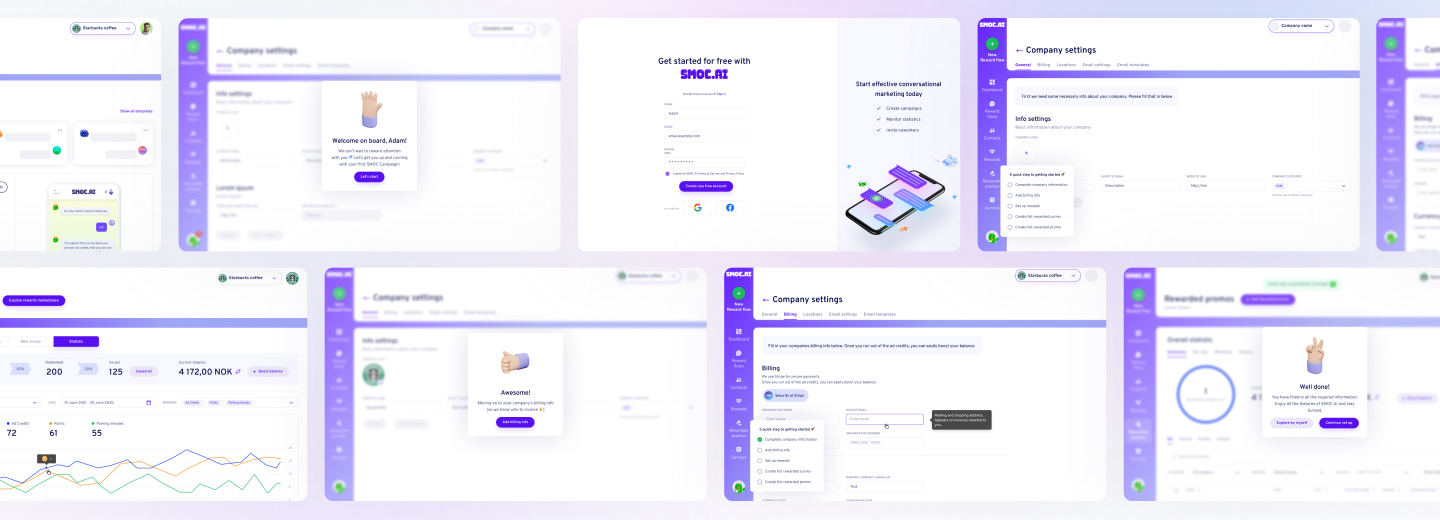
Scaling from Prototype into a User-Friendly and Conversational Marketing Platform
A practical operating model for CTOs
FinOps works when ownership is clear and recurring. It fails when it becomes a one-time audit.
A workable SaaS operating model usually includes a monthly cost review, weekly anomaly monitoring, clear ownership for major systems and subscriptions, and shared dashboards that engineering, finance, and product teams can all read. Procurement and security should be part of renewal and vendor decisions, not pulled in after contracts are signed.
The best teams also assign owners to business-level cost centers. A platform lead may own infrastructure efficiency. A product lead may own spend tied to a growth feature. A business operations or procurement lead may own SaaS contract visibility. Shared visibility reduces finger-pointing.
The review rhythm matters more than the org chart.
Inform first: build a complete cost picture
Most optimization efforts stall because the company cannot allocate spend accurately. Before chasing savings, get visibility right.
Start by building a full inventory across cloud services, Kubernetes workloads, third-party APIs, and internal SaaS tools. Tie each item to an owner, department, environment, product area, and renewal date where relevant. For SaaS subscriptions, pull data from invoices, SSO, finance systems, and app admin consoles. This is how unused tools and duplicate contracts start to surface.
Then fix tagging and naming discipline. If shared resources cannot be mapped to a team, customer segment, or environment, reporting stays weak and accountability stays vague.
At this stage, CTOs should focus on three outcomes:
- Visibility: One trusted source for cloud and SaaS spend
- Allocation: Spend mapped to teams, products, environments, or tenants
- Forecastability: Clear baseline for budgeting and variance tracking
Native cloud tooling helps here. AWS Cost Explorer, Azure Cost Management, and GCP billing tools can provide baseline visibility. For containerized stacks, Kubecost and similar tools give much better workload-level clarity. For SaaS discovery and license management, platforms like Zylo, Torii, Blissfully, and CloudNuro can expose untracked subscriptions and underused seats.
Optimize second: remove waste without hurting growth
This is the phase most teams jump to first, but it works best after visibility is in place.
On the infrastructure side, optimization usually starts with rightsizing compute and storage, shutting down idle non-production environments, cleaning unused assets, tuning autoscaling rules, and reviewing data transfer patterns. For stable workloads, reserved instances or savings plans can reduce costs materially when matched carefully to real demand.
On the SaaS side, optimization means consolidating overlapping tools, removing unused licenses, downgrading premium tiers that are not used, and renegotiating contracts based on actual adoption. Many companies pay for theoretical future usage rather than present business value.
The right question is simple: what are we paying for that does not change revenue, retention, compliance, or customer experience?
Architecture matters here too. If the product was built as a monolith and scaling one heavy function requires scaling the whole platform, infrastructure costs can rise faster than revenue. In several SaaS environments, moving toward better service separation, managed services, and more efficient workload design has helped support growth without a matching jump in spend. One public case showed a fast-growing SaaS business tripling its user base while cloud spend rose only 30%, driven by FinOps reviews and a more scalable technical model.
Operate third: put guardrails in place
Savings do not last without operating controls.
Budgets, anomaly alerts, approval rules, and renewal workflows should be part of normal delivery. If a new service launches without ownership, cost tags, and monitoring, the process is broken. If a SaaS contract renews without usage review, the process is broken. If teams can see spend only after month-end close, the process is too slow.
Guardrails should be firm, but not bureaucratic. Good examples include automated shutdown schedules for dev environments, alerts for sudden usage spikes, approval rules for new SaaS purchases, and quarterly application rationalization reviews.
Security and compliance stay inside this process, not outside it. In regulated sectors, cheaper is not better if it weakens auditability, encryption, access control, or data governance.
Balancing cost with performance and security
Strong FinOps does not force every system toward the lowest price point. It helps teams choose where premium spend is justified.
A customer-facing payment flow, clinical data pipeline, or real-time analytics engine may need higher availability or stronger controls than an internal reporting tool. The CTO’s role is to make those trade-offs visible and measurable.
That is where unit economics and service-level goals meet. If a more expensive architecture improves transaction success, lowers churn, or reduces incident frequency, that may be the correct call. If it does none of those things, it needs review.
This cost-performance-security balance is especially important in regulated SaaS categories like fintech, healthcare, insurance, and energy, where compliance shortcuts tend to become expensive later.
A 30-day starting point
If FinOps still feels too broad, start with one month of focused work.
Pick the top 20 cost drivers across cloud and SaaS. Assign owners. Fix missing tags. Review inactive licenses. Identify idle environments. Compare actual usage against contract tiers. Set up anomaly alerts. Build one dashboard with spend by team, environment, and product. Then run a cross-functional review with engineering, finance, and product in the same room.
That is usually enough to expose the first wave of waste and, more importantly, create a repeatable system for controlling it.

Need Checking What Your Product Market is Able to Offer?
EVNE Developers is a dedicated software development team with a product mindset.
We’ll be happy to help you turn your idea into life and successfully monetize it.
Conclusion
Technology partners can help or hurt FinOps maturity. The wrong partner ships features without cost accountability. The right one builds cost awareness into architecture, delivery, and reporting from day one.
At EVNE Developers, that means focusing on product outcomes rather than feature volume alone, with discovery, architecture, CI/CD, analytics, and ongoing delivery tied to measurable business goals. For SaaS products, this approach is especially useful when a company needs an MVP fast, a mature platform needs re-architecture, or a struggling product needs rescue before cloud and tooling costs spiral.
Public case work reflects that pattern. In one fintech platform project, a static site was rebuilt into a scalable product with a microservices-based structure designed for cost-efficient growth. The result included 100,000 leads in a year and a threefold increase in active users. In another financial services platform, a redesigned product and iterative delivery model contributed to a 70% increase in customer retention. Those examples speak less to one-time cost trimming and more to building a platform that scales without waste.
That is the real value of FinOps in SaaS: not smaller bills in isolation, but better margins, clearer ownership, and technology decisions that hold up under growth.
FinOps, or Financial Operations, is a framework that brings together finance, engineering, and business teams to manage cloud spending efficiently. For SaaS companies, FinOps is crucial because it helps optimize cloud costs, improve budgeting accuracy, and maximize ROI from cloud investments.
Begin by establishing cross-functional teams involving finance, engineering, and product stakeholders. Set clear cloud cost objectives, implement cloud cost monitoring tools, and create regular reporting and review cycles to drive accountability and continuous improvement.
Essential metrics include cost per customer, cost per feature, cloud spend as a percentage of revenue, resource utilization rates, and forecast accuracy. Monitoring these metrics helps identify inefficiencies and opportunities for savings.
Common strategies include rightsizing resources, leveraging reserved or spot instances, automating scaling, eliminating unused resources, and negotiating enterprise agreements with cloud providers.

About author
Roman Bondarenko is the CEO of EVNE Developers. He is an expert in software development and technological entrepreneurship and has 10+years of experience in digital transformation consulting in Healthcare, FinTech, Supply Chain and Logistics.
Author | CEO EVNE Developers