

 0
0

When a software project starts to fail, the first visible symptom is usually a missed date. The real damage starts earlier. Builds break more often. Requirements shift without approval. Critical bugs stay open for weeks. Stakeholders stop attending reviews, or they attend and leave with less confidence than they had before.
That is why a software project rescue checklist matters. It gives teams a practical way to detect trouble early, assess severity, and move from panic to control. A rescue is not about heroics. It is about triage, facts, disciplined decisions, and a reset around business outcomes.
WHAT'S IN THE ARTICLE
Why software project rescue needs a checklist
Industry research has repeated the same message for years: software projects rarely go off track because of one dramatic event. Trouble usually builds through a pattern of weak signals. Unclear requirements, poor planning, thin stakeholder involvement, weak testing, and unrealistic schedules tend to show up together.
A checklist creates one view of project health across product, engineering, delivery, finance, and governance. That matters even more for SaaS products and regulated domains, where missed quality gates or compliance gaps can turn a late project into a business risk.
A good checklist also changes team behavior. It replaces opinions with evidence. Instead of saying, “Things feel messy,” the team can say, “We have eight high-risk signals, including failing CI, undefined acceptance criteria, and a 22% budget overrun.” That is the point where useful action starts.
40 software project rescue signals checklist
The checklist below groups 40 warning signals into eight categories. One or two isolated issues do not always mean a project is failing. A cluster of issues across multiple categories usually does.
| Category | 5 rescue signals to check |
| Technical health | Frequent critical defects; unstable builds; low automated test coverage; architecture bottlenecks; recurring security vulnerabilities |
| Scope and requirements | Vague requirements; uncontrolled scope creep; constant reprioritization; missing acceptance criteria; features built without user validation |
| Timeline and delivery | Repeated milestone slips; estimates with no buffer; constant re-planning; chronic overtime; “almost done” work that never closes |
| Budget and resourcing | Cost overruns; missing key roles; unfilled specialist gaps; delayed approvals or payments; rescue work consuming planned roadmap budget |
| Team dynamics | High turnover; low morale; poor cross-team communication; blame-heavy culture; knowledge locked with one or two people |
| Stakeholder engagement | Product owner absent; conflicting sponsor priorities; late-stage requirement changes from leadership; slow decision-making; weak review attendance |
| Product quality and user impact | Rising support tickets; poor beta feedback; production regressions; degraded performance under load; low user acceptance rates |
| Process and tooling | No change control; outdated documentation; manual deployments; no clear KPI tracking; backlog hygiene is poor or nonexistent |
The next step is scoring. Count the signals that are currently true, not historically true. A project that had unstable builds last quarter but is stable today should not be penalized twice. The goal is a current-state diagnosis.
- 0 to 5 signals: Pressure exists, but the project is likely recoverable through tighter management and faster issue handling.
- 6 to 12 signals: Formal rescue planning is needed, with executive visibility and a revised delivery baseline.
- 13 to 20 signals: The project is in serious distress, and scope, team structure, or architecture may need a reset.
- More than 20 signals: Treat this as a turnaround effort, not routine delivery management.
Signal count alone is not enough. Severity matters. A project with eight signals can be in worse shape than one with twelve if the eight include security failures, absent product ownership, and no reliable deployment path.
Which checklist signals deserve immediate escalation
Some signals can wait for the next weekly review. Others cannot.
Security vulnerabilities in production, failed compliance checks, broken release pipelines, missing backup or rollback procedures, and unclear ownership of core product decisions should move straight to the top of the rescue backlog. These issues threaten revenue, trust, and operational stability at the same time.
The same is true when the team is shipping output without business validation. A project can hit sprint commitments and still fail if it is building the wrong thing. Rescue work is not only about fixing code. It is also about fixing direction.

Looking to Build an MVP without worries about strategy planning?
EVNE Developers is a dedicated software development team with a product mindset.
We’ll be happy to help you turn your idea into life and successfully monetize it.
Software intervention plans for any occasion
Software project intervention plan for the first 72 hours
Once the checklist shows clear distress, the team needs an intervention plan that starts fast and stays structured. The first 72 hours are about stopping further damage, creating visibility, and setting decision rights.
A rescue team should not start with new feature ideas or broad process debates. Start with control.
- Freeze non-essential feature work
- Protect production stability
- Restore build and deployment reliability
- Name the recovery lead: One person owns coordination, status, risk escalation, and decision follow-through.
- Run a project audit: Review codebase, architecture, backlog, timeline, budget, team capacity, and stakeholder commitments.
- Rank issues by business impact: Separate critical blockers from noise and label what must be fixed now, this week, and later.
- Reset stakeholder communication: Daily internal syncs and a fixed sponsor update rhythm remove ambiguity fast.
- Create a no-blame operating mode: Rescue efforts fail when the team spends more time defending past choices than fixing present risks.
This phase should produce a small set of hard outputs: a current-state summary, a triaged backlog, a risk log, a revised short-term plan, and a clear owner for each critical action.
Software project intervention plan for days 4 through 30
After triage, the work shifts from stabilization to controlled recovery. Most projects need a 30-day reset window with measurable targets. That window is long enough to show real change and short enough to keep urgency high.
A useful rule is this: do not promise full recovery in week one. Promise restored control, improved predictability, and visible quality gains.
| Time window | Primary objective | Expected outputs |
| Days 4 to 7 | Stabilize delivery | Passing CI pipeline, critical defect triage complete, feature freeze enforced where needed |
| Week 2 | Re-baseline the plan | Revised scope, milestone reset, clarified acceptance criteria, confirmed owners |
| Week 3 | Strengthen execution | Better QA coverage, architecture fixes started, stakeholder demos back on schedule |
| Week 4 | Prove the turnaround | KPI trend improvement, fewer escaped defects, predictable sprint output, decision log in active use |
In many rescues, scope reduction is the highest-value move. That can be hard for sponsors to accept, especially after months of investment. Still, shipping a smaller working product is usually better than continuing with a larger broken one.
Team structure may also need attention. If releases fail because no one owns DevOps, or the product keeps changing because no one owns prioritization, the rescue plan should correct those gaps early. More hours from the same team rarely fix a system problem.

Proving the Concept for FinTech Startup with a Smart Algorithm for Detecting Subscriptions
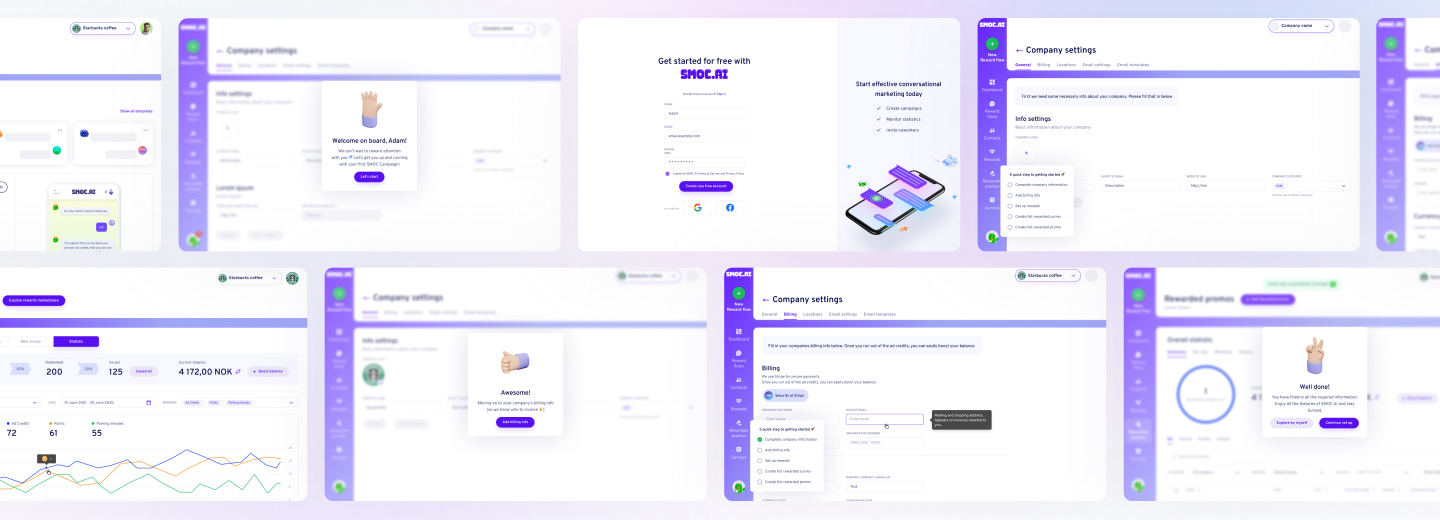
Scaling from Prototype into a User-Friendly and Conversational Marketing Platform
Project rescue KPIs that show whether recovery is real
Teams in rescue mode need a small KPI set that can be reviewed weekly. Too many metrics create noise. Too few create blind spots.
The best recovery metrics connect delivery health to business impact. They should tell leaders whether the project is becoming more stable, more predictable, and more valuable to users.
- Delivery predictability: Planned versus completed work, milestone adherence, and schedule variance
- Quality trend: Open critical defects, escaped defects, regression rate, and failed test percentage
- Engineering stability: Build success rate, deployment frequency, rollback frequency, and mean time to recovery
- Product clarity: Stories with acceptance criteria, scope changes per sprint, and unresolved decision count
- Stakeholder health: Review attendance, response time on approvals, and satisfaction with progress visibility
- Team health: Attrition risk, overtime frequency, and concentration of knowledge in key individuals
A rescue is working when these metrics move together. If velocity improves while escaped defects rise, the team is just shipping problems faster. If the backlog looks cleaner but sponsors still do not approve priorities, governance remains broken.
Common software project rescue mistakes
Teams in rescue mode need a small KPI set that can be reviewed weekly. Too many metrics create noise. Too few create blind spots.
Rescue efforts often fail for predictable reasons. The project may get a new plan, but the operating habits stay the same. That is when teams lose another month without fixing the root cause.
- Treating symptoms as root causes. Broken deadlines are often a result of weak scope control, unclear decisions, or unstable engineering practices.
- Keeping every promised feature. Recovery plans fail when leaders refuse to cut scope, even after evidence shows the plan is not viable.
- Adding people without fixing ownership. More developers do not help if product decisions, QA standards, or release approvals are still unclear.
- Reporting optimism instead of facts. Sponsors need risk visibility, not reassurance that everything is “back on track” after two good days.
- Declaring success too early. One stable sprint is progress, not proof that the project is healthy again.
These mistakes are common in startups, scale-ups, and enterprise teams alike. Pressure changes the setting, not the pattern.

Need Checking What Your Product Market is Able to Offer?
EVNE Developers is a dedicated software development team with a product mindset.
We’ll be happy to help you turn your idea into life and successfully monetize it.
Conclusion
The best rescue plans do more than recover a schedule. They leave the project with better operating discipline than it had before the crisis.
That usually means a tighter product discovery process, cleaner backlog rules, stricter acceptance criteria, stronger CI and release controls, better documentation, and a clearer cadence for sponsor decisions. It also means putting business metrics next to delivery metrics. Shipping faster is not enough if activation, retention, conversion, or operational efficiency do not improve.
For teams building in fintech, healthcare, insurance, energy, or other complex sectors, prevention also depends on compliance-ready delivery habits. Security review cannot be postponed until the end. Neither can audit trails, data handling controls, or architecture decisions that affect scalability and privacy.
This is where experienced product development partners often add value. A rescue team with strong product, engineering, QA, and delivery leadership can assess the real failure pattern quickly, cut through internal assumptions, and rebuild the plan around measurable outcomes. Not every troubled project needs outside support, but many benefit from an external view when trust is low, deadlines are fixed, or technical debt is already slowing every decision.
A rescue checklist is useful because it makes those moments visible early. It gives leaders a shared way to ask better questions: What is actually broken? What is still viable? What can ship safely? What must change now? When those questions are answered with evidence, recovery becomes much more likely.
A software project rescue checklist is a structured guide that helps identify warning signs of a struggling project and outlines actionable steps to get it back on track. It covers common issues, assessment criteria, and intervention strategies.
Key stakeholders include project managers, team leads, developers, QA specialists, business analysts, and sometimes external consultants with experience in project recovery.
The duration varies depending on the complexity and severity of the issues. Some rescues take a few weeks, while others may require several months.
Common reasons include unclear requirements, poor communication, lack of stakeholder involvement, inadequate planning, and technical debt.

About author
Roman Bondarenko is the CEO of EVNE Developers. He is an expert in software development and technological entrepreneurship and has 10+years of experience in digital transformation consulting in Healthcare, FinTech, Supply Chain and Logistics.
Author | CEO EVNE Developers