

 0
0

Fast SaaS MVPs do not happen because a team moves faster in every direction. They happen because the team refuses to move in unnecessary directions at all.
That is the real driver behind time-to-value in an 8 to 12 week MVP. The goal is not to ship a smaller version of a future platform packed with half-finished ideas. The goal is to release one clear workflow that solves one painful problem, gets into users’ hands quickly, and starts producing evidence. Evidence can mean signups, activation, usage frequency, pilot conversions, or paid commitments. If those signals are weak, the product needs a change. If they are strong, the next investment becomes much easier to justify.
A twelve-week window is aggressive, but it is realistic for many SaaS products when scope is controlled, architecture stays simple, and feedback starts before heavy development begins.
WHAT'S IN THE ARTICLE
What an 8 to 12 week MVP actually includes
A real MVP is not a rough prototype, and it is not a production-grade platform with every future module postponed by a few days. It sits in the middle. Users can sign in, complete the core task, and get the promised value without manual handholding from the product team.
Speed is a scope problem before it becomes an engineering problem.
Teams that hit this timeline usually share a few traits:
- One primary user persona
- One main job to be done
- One success metric
- Limited integrations
- Clear approval path
- Daily access to decision-makers
If any of those are missing, the calendar starts slipping long before coding gets difficult.
A practical week-by-week blueprint
An 8 to 12 week plan works best when every phase has a clear output and a clear decision gate. The structure below is simple on purpose. Most delays come from vague ownership, open-ended design work, or a backlog full of “maybe later” items that quietly become “must-have” work.
| Week | Focus | Main Output |
| 1 | Problem framing, scope lock, success metrics | Prioritized backlog, core user flow, MVP definition |
| 2 | Wireframes and clickable prototype | Testable prototype for core journey |
| 3 | User testing and design revision | Confirmed UX direction, technical decisions locked |
| 4 | Setup and first build sprint | Repo, CI/CD, staging, auth, data model |
| 5 | Core workflow development | Main feature path working end to end |
| 6 | Secondary essentials | Billing, notifications, admin basics, analytics |
| 7 | Integration hardening and QA | Stable beta version, bug triage, performance checks |
| 8 | Pilot release | Small user group live, early product data coming in |
| 9 to 10 | Iteration window | Fixes, UX refinements, missing critical items |
| 11 to 12 | Wider launch prep | Monitoring, onboarding, documentation, release plan |
For a straightforward B2B SaaS product, eight weeks can be enough. That is more likely when the product has one main workflow, standard authentication, basic subscription logic, and no heavy compliance burden.
Twelve weeks is the safer target when the domain includes regulated data, complex permissions, multi-party workflows, or external systems that can slow testing and approval. Fintech, healthcare, insurance, energy, and property products often fit this longer band, even when the MVP is tightly trimmed.
At EVNE Developers, this kind of timeline is usually handled with a product-first cadence: research first, scope second, design validation third, then fast delivery with analytics from day one. That order matters. Teams lose weeks when they try to “save time” by skipping validation and then pay for it in rework.

Looking to Build an MVP without worries about strategy planning?
EVNE Developers is a dedicated software development team with a product mindset.
We’ll be happy to help you turn your idea into life and successfully monetize it.
Main points of a SAAS MVP fast release success
Ruthless scope control is the real accelerator
Most MVPs do not miss the deadline because the team picked the wrong JavaScript framework. They miss because the backlog was never forced through a real business filter.
A useful test is simple: if a feature disappeared today, would the product still prove or disprove the core business hypothesis? If the answer is yes, it probably does not belong in the first release.
Strong scope control usually looks like this:
- Must-have: The smallest feature set that allows a user to complete the core job from start to finish
- Should-have: Helpful items that improve usability but do not change whether the MVP can validate demand
- Could-have: Nice additions that support growth later
- Won’t-have now: Anything included only because competitors have it or internal stakeholders expect it
This is where methods like MoSCoW, RICE, or value-versus-effort scoring earn their place. They turn abstract product debates into visible trade-offs. Industry examples show teams cutting 50 to 60 percent of initial scope and reaching live user feedback much faster, often with better learning because the product stayed focused on one strong use case.
That discipline also helps design. A small number of screens, fewer roles, and fewer branching paths make usability testing more reliable in the first three weeks.
The delivery model that keeps momentum high
A hybrid of Lean thinking, Scrum structure, and Kanban flow works well for compressed timelines.
Lean keeps the team honest about why a feature exists. Scrum gives the team short planning cycles and regular demos. Kanban limits work in progress so too many parallel tasks do not clog the pipeline. Industry reporting has linked structured Scrum teams with lower scope creep, while Kanban teams have reported lead-time improvements near 40 percent when work-in-progress limits are enforced.
What matters is not the label. What matters is whether the team can do four things every week:
- Decide quickly
- Build in small slices
- Show working software
- Change direction without drama
If those four habits are in place, the framework is doing its job.
Tech choices that save weeks
The fastest MVP stacks are rarely the most original ones. They are the ones that remove custom work around standard product needs.
That means buying or reusing the common parts and reserving custom engineering for the part users will actually pay for.
A high-velocity SaaS MVP usually benefits from choices like these:
- Authentication: Managed tools like Supabase Auth, Firebase Auth, or a proven identity provider instead of custom user management
- Payments: Stripe or another mature billing platform instead of homegrown subscription logic
- UI foundation: React or Next.js with a component library and Tailwind instead of custom design systems from scratch
- Deployment: Vercel, managed cloud services, and automated pipelines instead of manual release steps
- Data and events: Product analytics wired in during sprint one, not after launch
Low-code and no-code tools can also be the right choice when the product logic is straightforward and speed matters more than deep customization. Some teams report build-time reductions of 70 to 80 percent with these platforms. The trade-off is flexibility later, so the decision should be based on the product’s likely complexity, not on fashion.
For custom builds, a simple monolith is often the smartest MVP architecture. Microservices, event buses, and “future-ready” abstractions add cost before they add value. Clean code still matters, but clean does not mean overbuilt.
CI/CD matters here too. Automated tests and frequent deployments shorten feedback loops, catch defects early, and reduce the last-minute stabilization crunch that destroys launch dates.
Feedback has to run in parallel with development
Teams that wait until week eight to hear from users are not reducing time-to-value. They are delaying the moment of truth.
A better pattern is to test early, build, test again, and then release to a small beta group before the wider launch. Even five to seven users in prototype testing can expose major workflow issues. In some teams, that kind of early testing has saved weeks of rework because a flawed path was caught before engineering effort piled up behind it.
The same rule applies after the first release. An MVP should launch with enough instrumentation to answer basic questions fast:
- Are users activating?
- Where are they dropping off?
- Which features are ignored?
- Are trial users becoming paying users?
- Does the promised value arrive in one session, one day, or one week?
Without that data, the team is shipping software but not building product knowledge.

Proving the Concept for FinTech Startup with a Smart Algorithm for Detecting Subscriptions
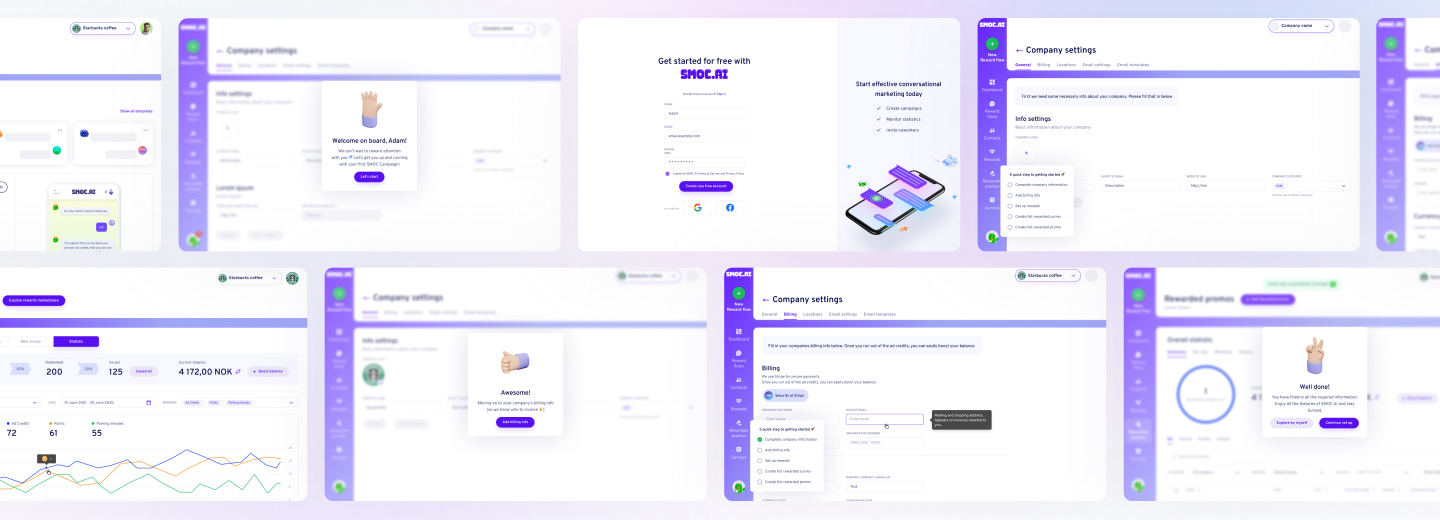
Scaling from Prototype into a User-Friendly and Conversational Marketing Platform
Why many “12 week MVPs” still miss the mark
Most delays are predictable. They are not random bad luck.
Common causes include:
- Undefined success metrics
- Late stakeholder feedback
- Overdesigned UI
- Too many integrations
- Compliance questions raised after development starts
- No buffer for bug fixing and release prep
Another common issue is confusing “launchable” with “everything needed for scale.” An MVP does not need enterprise-grade reporting, advanced permissions for every edge case, or polished automation around every internal process. It needs enough quality, security, and reliability for the target users and domain. In regulated sectors, that bar is higher, so the scope must get even tighter.
The companies that do this well treat the first release as a learning system, not a monument. They plan for validation, not perfection. They measure business outcomes, not feature volume. And they build the first version in a way that can be improved without rewriting the whole product six weeks later.
That is how a SaaS MVP creates value inside a 12 week window: by proving something meaningful early, with as little waste as possible, and with a product team disciplined enough to keep saying no until the right yes is live.

Need Checking What Your Product Market is Able to Offer?
EVNE Developers is a dedicated software development team with a product mindset.
We’ll be happy to help you turn your idea into life and successfully monetize it.
Conclusion
An eight to twelve week MVP does not need a large org chart. It needs a compact team with decision-making power and very low handoff friction.
A typical high-performing setup is one product owner, one designer, and one or two strong full-stack engineers, with QA support added at the right stage. That structure keeps communication direct and backlog decisions fast. Weekly demos help. Daily standups help. Long approval chains do not.
This is also where leadership involvement changes the outcome. When product decisions sit unresolved for three days, the whole team slows down. Near real-time access to a founder, product lead, or accountable stakeholder is often more valuable than adding another developer.
Focus on features that address your users’ primary pain points. Use frameworks like MoSCoW (Must-have, Should-have, Could-have, Won’t-have) or the Kano Model to prioritize what’s essential for launch.
A lean team typically includes a product manager, UX/UI designer, frontend and backend developers, and a QA/test engineer. Consider leveraging no-code/low-code tools or experienced SaaS development partners to accelerate delivery.
Build with scalability in mind by choosing robust cloud infrastructure, modular architecture, and best practices in code quality. Avoid over-engineering, but ensure your foundation can support future growth.
Track metrics such as user adoption, engagement, retention, feedback quality, and conversion rates. Use these insights to guide future development and investment decisions.

About author
Roman Bondarenko is the CEO of EVNE Developers. He is an expert in software development and technological entrepreneurship and has 10+years of experience in digital transformation consulting in Healthcare, FinTech, Supply Chain and Logistics.
Author | CEO EVNE Developers