

 0
0

Most teams do not make a bad vendor choice because they picked the wrong programming language or the wrong hourly rate. They make a bad choice because they assessed surface signals and skipped operational proof.
A polished portfolio, a friendly sales process, and a long service list can all look reassuring. None of them tell you how a software development company handles risk, secures code, ships reliably, or responds when plans change.
If the product matters to revenue, compliance, customer trust, or internal efficiency, your screening process should look closer to supplier due diligence than agency shopping. That shift changes the questions you ask and the evidence you expect to see.
WHAT'S IN THE ARTICLE
- 01How to choose a software development company beyond portfolio reviews
- 02Supplier due diligence for a software development company
- 03Security evidence to request before signing a software development contract
- 04Delivery quality signals that predict software project success
- 05Client outcome proof that a software development company should show
- 06A practical vetting process for your final software development shortlist
- 07Conclusion
How to choose a software development company beyond portfolio reviews
A portfolio shows what a company has made. It does not show how the company made it, whether the software was maintainable, whether deadlines held, or whether the client got measurable business value.
That gap matters more in SaaS and regulated sectors. NIST guidance on software supply chain security makes this very clear: supplier evaluation should include development methods, verification practices, progress monitoring, and remediation, not just a visual review of past work. In plain terms, you are not only buying code. You are buying a delivery system.
A stronger screening model looks like this:
| Vetting area | What to verify | Why it matters | Red flag |
| Business fit | Domain context, product goals, success metrics | Good code still fails if it solves the wrong problem | Talks mostly about features, not outcomes |
| Security practices | Verification methods, scan results, access controls, remediation flow | Security debt is expensive and often hidden early | “We take security seriously” with no artifacts |
| Delivery discipline | Release cadence, test coverage approach, batch size, planning rhythm | Predictable delivery beats heroic last-minute pushes | Large drops, unstable scope, weak QA story |
| Team model | Who actually does the work, turnover, subcontracting | The sales team is not the delivery team | Vague staffing answers |
| Proof of results | Case studies, adoption data, speed gains, cost impact | Claims need business evidence | Only testimonials with no numbers |
This is where many procurement conversations improve fast. Once a software company knows you will ask for evidence, not promises, the serious partners tend to stand out quickly.
Supplier due diligence for a software development company
NIST SP 1326 defines due diligence research as reviewing all available and relevant information about a supplier or product before acquisition or major decision-making. That is a useful model for software partner selection, especially when the product will touch customer data, regulated workflows, or critical internal systems.
The same guidance points to assessment components like FOCI, provenance, resilience, foundational cyber practices, and supply-chain tiers. Those terms sound formal, but the practical meaning is simple: who is involved, where the software components come from, how stable the supplier is, whether basic cyber discipline exists, and what dependencies sit behind the scenes.
Before you compare proposals, gather a supplier view that goes deeper than sales materials.
- Provenance: Where do key code components, libraries, and cloud dependencies come from?
- Resilience: What happens if a lead engineer leaves, an outage hits, or scope changes sharply?
- Foundational cyber practices: Which secure coding, access, review, and logging standards are used?
- Supply-chain tiers: Which third parties, contractors, or external services are involved?
- Public reputation
- Client retention
- Delivery transparency
A good partner should answer these without getting defensive. Clear answers suggest operating maturity. Evasive answers usually mean the opposite.

Looking to Build an MVP without worries about strategy planning?
EVNE Developers is a dedicated software development team with a product mindset.
We’ll be happy to help you turn your idea into life and successfully monetize it.
Security evidence to request before signing a software development contract
Security claims are easy to make. Evidence is harder to produce.
NIST’s software supply chain guidance says buyers should apply minimum software verification techniques when assessing suppliers, developers, system integrators, and external service providers. It also ties supplier assessment to concrete practices like threat modeling, fuzzing, automated scanning, and documentation of verification results.
CISA has reinforced the same direction with its secure software development attestation form, built to help confirm that software producers use minimum secure development techniques and toolsets. Even if you are not a federal buyer, the idea is useful: ask a partner to attest to its secure development process and then show proof.
After you have heard the overview, ask for artifacts.
- Threat model sample
- Static analysis or dependency scan output
- Sample security backlog or remediation workflow
- Access control and secrets-management approach
- CI/CD quality gates
- Incident response process
The goal is not to turn your vendor interview into a formal audit. The goal is to see whether secure development is built into delivery or bolted on at the end.
Pay close attention to how findings are handled. A partner that shows one scan report but cannot explain who triages issues, how severity is ranked, how fast fixes land, and how recurring problems are prevented is still operating at a weak level. Mature teams can usually walk through the full loop: identify, prioritize, fix, verify, document.
If your product sits in healthcare, fintech, insurance, or any environment with strong compliance demands, this step should be non-negotiable.
Delivery quality signals that predict software project success
Security is one half of the screen. Delivery discipline is the other.
DORA’s 2024 report remains useful here because it links software team practices to performance. A few signals matter a lot when you vet a software development company: small batch sizes, robust testing, and stable organizational priorities. Those are not abstract process ideas. They are predictors of how reliably a team can ship.
Small batch sizes mean work moves in manageable pieces. That lowers risk, shortens feedback loops, and makes defects easier to isolate. If a company describes delivery in large phases with long quiet periods followed by massive releases, expect surprises late in the project.
Robust testing matters for the same reason. Ask what gets automated, what stays manual, when regression tests run, and how release approval works. If the answer is “QA happens near the end,” you are looking at a fragile system.
Stable priorities are easy to ignore during vendor selection, yet they often decide whether a project stays on track. Strong partners push for a backlog with clear decision rights. They do not simply accept constant shifts and then blame delivery delays on the client later.
There is also a modern wrinkle here. DORA reported that AI adoption can improve individual productivity, flow, and job satisfaction, while also reducing delivery stability and throughput. So if a software company markets AI-assisted speed, ask the next question: what controls protect quality and release stability? Fast code generation without disciplined review can create expensive cleanup work.
A reliable delivery partner should be able to answer questions like these without preparation:
- How often do you deploy in active projects?
- What is a typical pull request or work-item size?
- How much of your testing is automated?
- How do you control scope changes mid-sprint?
- What happens when quality targets conflict with a deadline?
The substance of the answers matters more than the buzzwords.

Proving the Concept for FinTech Startup with a Smart Algorithm for Detecting Subscriptions
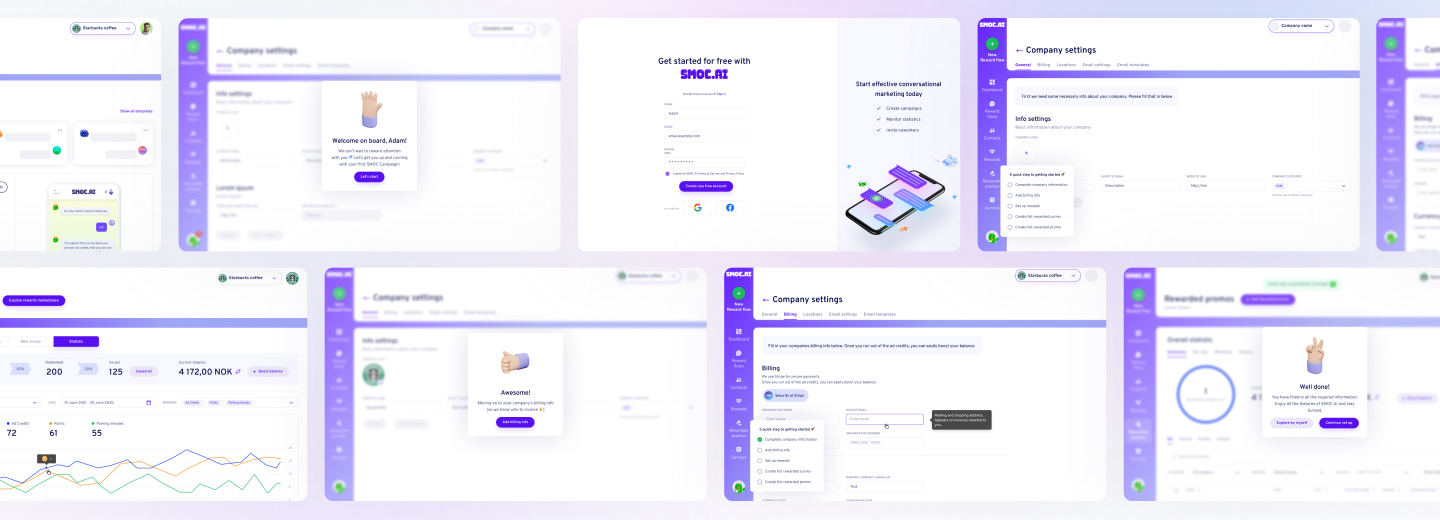
Scaling from Prototype into a User-Friendly and Conversational Marketing Platform
Client outcome proof that a software development company should show
Past outcomes should be documented, measurable, and tied to business impact.
That means case studies should go beyond “we built an app” and show what changed after launch. Did onboarding speed improve? Did support load drop? Did request processing get faster? Did users adopt the product? Did release time shrink? Without those details, a case study is marketing copy, not decision support.
Published client evidence provides a good model for what concrete proof can look like. In one volunteering platform case study, the team reports delivery of a full-scale MVP including a mobile app, admin panel, prototyping, and documentation. More importantly, the case study includes outcomes: 200 communities participated within a month, and the solution handled requests three times faster.
That kind of detail helps buyers ask better questions. Was the speed gain measured against a manual process? What product decisions made adoption faster? Which parts of the MVP drove the first month results? A strong partner should be ready to unpack the numbers, not just post them.
Published testimonials also show the type of evidence worth looking for in any vendor review process:
- Delivery speed: One client said the team finished in three months what had looked like a nine-month effort.
- Data-backed advice: Another said recommendations were based on numbers and reports, not vague theories.
- Commercial value: A client described the pricing as far below agencies that were six or seven times more expensive.
These examples matter because they combine three things buyers care about: speed, proof, and value. When you evaluate any software development company, ask for those same categories of evidence.
A practical vetting process for your final software development shortlist
By the time you reach a shortlist, you should be moving from marketing review to operational validation.
This works best when every finalist goes through the same process. That keeps comparisons fair and reduces the chance that a polished sales team wins over a better delivery team.
A simple process is enough if you keep it disciplined:
- Screening call: Check product fit, relevant domain work, team structure, and communication quality.
- Evidence review: Request security artifacts, delivery examples, sample plans, and measurable case studies.
- Team interview: Meet the people who would actually work on the product, not only account managers.
- Working session: Review your backlog, constraints, and architecture questions together to see how the team thinks.
- Paid discovery or pilot: Use a short engagement to validate speed, clarity, and execution before a larger commitment.
The working session is often the most revealing step. Good teams ask sharp questions about users, dependencies, compliance, data flows, release risks, and success metrics. Weak teams rush to estimate features before they understand the problem.
A discovery phase is especially useful for complex products. It reduces guesswork, gives both sides a chance to test collaboration, and produces artifacts you can use later even if you choose a different supplier.
One more filter helps at this stage: ask each finalist what they would challenge in your current plan. The best partners usually have a point of view. They do not just say yes to everything.

Need Checking What Your Product Market is Able to Offer?
EVNE Developers is a dedicated software development team with a product mindset.
We’ll be happy to help you turn your idea into life and successfully monetize it.
Conclusion
The difference between a risky vendor and a dependable partner is usually visible early.
A dependable team can show process artifacts, quality controls, communication rhythm, and a clear path from business goal to technical work. It can explain how decisions get made, how risk gets surfaced, and how tradeoffs are documented. It can show proof from previous projects that the work led to measurable results. That is the standard to hold.
When a software development company can show secure development evidence, disciplined delivery habits, and documented client outcomes, vendor selection gets much easier. You are no longer choosing based on confidence alone. You are choosing based on how the team actually works.
Choosing the right software development partner is a critical decision that can significantly impact the success of your project. By thoroughly vetting potential partners and evaluating their technical expertise, communication skills, project management processes, and cultural fit, you set your business up for a smoother development journey and a better end product. Take the time to research, ask the right questions, and prioritize transparency and collaboration. With a strategic approach, you’ll find a partner who supports your long-term business goals.
Key factors include technical expertise, relevant experience, communication practices, project management methodologies, transparency, and cultural compatibility.
Review their portfolio, request client references, read case studies, and check independent reviews on platforms like Clutch or GoodFirms.
While budget is important, prioritizing quality and value over the lowest price will yield better long-term results and reduce the risk of costly mistakes.
Ask about their development process, team structure, technology stack, previous projects, communication protocols, and how they handle challenges or changes in scope.

About author
Roman Bondarenko is the CEO of EVNE Developers. He is an expert in software development and technological entrepreneurship and has 10+years of experience in digital transformation consulting in Healthcare, FinTech, Supply Chain and Logistics.
Author | CEO EVNE Developers