

 0
0

The fastest way to waste budget on software delivery is to pick an engagement model based on what sounds “most flexible” or “most accountable,” without checking what your product actually needs day to day.
Most teams are balancing the same set of forces: speed vs. certainty, control vs. bandwidth, and short-term output vs. long-term product knowledge. Dedicated teams, staff augmentation, and managed delivery each optimize a different part of that equation.
WHAT'S IN THE ARTICLE
- 01The three models in plain terms
- 02Dedicated team: best for compounding product knowledge
- 03Staff augmentation: best for precision hiring and short spikes
- 04Managed delivery: best when you need a delivery engine, not extra people
- 05What model fits common product stages?
- 06A practical selection framework (based on how work arrives)
- 07Conclusion
The three models in plain terms
A dedicated team is a stable, cross-functional group (engineers, QA, design, DevOps as needed) working only on your product.
Staff augmentation is the cleanest option when you already have a functioning delivery system and simply need extra capacity or a specific skill set.
Managed delivery (often called managed services or project-based outsourcing) hands the delivery engine to the vendor, with milestone or SLA-style oversight from your side.
What you are really choosing: control, accountability, and operating model
Every model answers three practical questions:
- Who sets priorities and translates them into tasks?
- Who owns delivery risk (quality, timeline, scope change)?
- Who holds the context (domain knowledge, architecture decisions, product metrics)?
If you have clear answers for those, the choice becomes much simpler.
Side-by-side comparison (what changes operationally)
The differences are easiest to see across a few dimensions that affect cost, velocity, and risk.
| Dimension | Staff Augmentation | Dedicated Team | Managed Delivery |
| Best when | You already run delivery well and need extra hands or niche skills | You need continuity for an evolving product | You want a vendor to own end-to-end delivery outcomes |
| Control of day-to-day work | Highest (you manage tasks directly) | High to medium (shared rhythm; you steer priorities) | Lowest (you govern via milestones, KPIs, SLAs) |
| Who manages | You (PM/CTO/tech leads) | Shared (you set priorities; vendor supports operations) | Vendor (PM, process, staffing, reporting) |
| Speed to start | Fast for 1 to 2 specialists | Fast for a full pod once roles are agreed | Moderate; requires clearer scope and governance |
| Scaling up/down | Easiest for individuals | Straightforward, usually with some notice | Hardest; changes often require contract or SLA updates |
| Cost shape | Variable, pay for hours/capacity used | Stable monthly burn for a committed team | Predictable budgets, often fixed-price or milestone-based |
| Knowledge retention | Depends on your documentation and continuity | Strong, team compounds product context | Strong on vendor side; handover needs active planning |

Looking to Build an MVP without worries about strategy planning?
EVNE Developers is a dedicated software development team with a product mindset.
We’ll be happy to help you turn your idea into life and successfully monetize it.
Dedicated team: best for compounding product knowledge
A dedicated team fits when the product is expected to change continuously and the real work is not “build these screens,” but “keep learning, shipping, and improving.” That describes most SaaS roadmaps, regulated platforms, data-heavy products, and anything with long-lived architecture.
This model works well when you want strong control over priorities and quality, but do not want to recruit and retain every role in-house. Many companies use a dedicated team like an extension of their org, with the vendor handling hiring, HR, and performance support while product direction stays with the client.
A dedicated team tends to pay off more as months pass, because delivery gets faster once the team internalizes your domain, users, and codebase.
A good fit often looks like this:
- Business critical roadmap: The product is core to revenue, risk, or differentiation.
- Complex domain: Fintech, insurance, healthcare, energy, compliance-heavy SaaS.
- Metrics-driven iteration: You ship, measure, and adjust monthly or even weekly.
- Architecture needs stewardship: Platform work, integrations, performance, security, multi-tenant design.
Staff augmentation: best for precision hiring and short spikes
Staff augmentation is the cleanest option when you already have a functioning delivery system and simply need extra capacity or a specific skill set.
You keep full operational control: sprint planning, code review standards, release cadence, incident response, and technical direction. The vendor’s job is to source and provide vetted specialists quickly.
This works especially well when the “unknowns” are limited. You know what must be built, you have someone who can manage the work, and you just need more throughput.
Common high-ROI scenarios include adding specialists for:
- Short-term capacity spikes: A launch push, a backlog burn-down period, a migration window.
- Niche expertise: Security, DevOps, data engineering, mobile, automation QA, accessibility.
- Backfill coverage: Parental leave, hiring gaps, or interim support during reorgs.
Staff augmentation can start fast, but it can also end fast. That flexibility is the point, and it’s also the primary risk if you do not capture knowledge as you go.
Managed delivery: best when you need a delivery engine, not extra people
Managed delivery is the right call when your organization does not want to run software delivery at the task level, or cannot do it consistently right now.
In this setup, the vendor owns the delivery plan, staffing, quality gates, and often release management. Your team stays involved, but the focus shifts to governance: defining outcomes, reviewing progress, approving milestones, monitoring KPIs, and validating that what is shipped matches the business goal.
Managed delivery is also common when you need a vendor to stand behind commitments. Think fixed milestones, uptime targets, security controls, response times, or compliance requirements that must be operationalized.
A strong managed delivery engagement depends on clarity. Not perfect specs, but clear success criteria, ownership boundaries, and change control.

Proving the Concept for FinTech Startup with a Smart Algorithm for Detecting Subscriptions
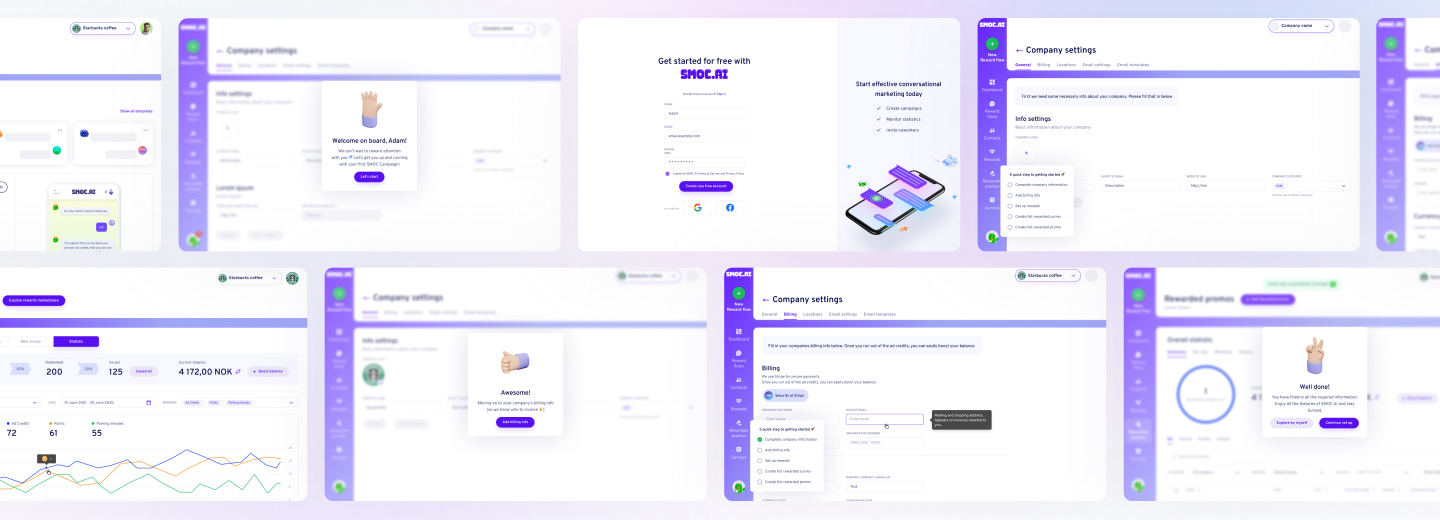
Scaling from Prototype into a User-Friendly and Conversational Marketing Platform
What model fits common product stages?
A lot of debate disappears when you map the model to the stage of product maturity.
Here is a simple way to think about it:
| Product situation | What tends to work best | Why |
| MVP with many unknowns | Dedicated team (often with discovery) | You need fast iteration, learning loops, and continuity |
| Existing product, aggressive roadmap quarter | Staff augmentation | You already know the system and need more throughput |
| New build, limited internal delivery bandwidth | Managed delivery | You need a vendor to run the process end to end |
| Regulated expansion (HIPAA/GDPR/security work) | Dedicated team or managed delivery | Consistency, documentation, and compliance routines matter |
| Project rescue with missed deadlines | Managed delivery or dedicated team with strong lead | Clear accountability, triage, and re-baselining are required |
A practical selection framework (based on how work arrives)
Most organizations do not fail because engineers cannot build. They fail because work arrives in a way the model cannot absorb.
Use this quick framework:
- If you can run delivery and just need capacity or a specialist, choose staff augmentation.
- If you need a stable team to carry context and ship continuously, choose a dedicated team.
- If you need the vendor to run delivery and carry outcome risk, choose managed delivery.
Then validate with two more checks: your internal bandwidth and how often priorities change.
The hidden costs that show up later (and how to reduce them)
These models have predictable failure modes. Naming them early helps you design guardrails.
A few patterns that come up often:
- Staff augmentation without strong leadership: Output happens, but direction drifts, PR reviews slow down, and releases become stressful.
- Dedicated team without real product ownership: A stable team can still build the wrong things quickly if decisions are not made fast and backed by metrics.
- Managed delivery with fuzzy success criteria: You may get “on time” delivery that misses adoption, conversion, or operational needs.
To reduce these risks, define the operating mechanics up front. A lightweight but explicit agreement on roles, definition of done, release cadence, security practices, and how decisions get made will outperform a thick document nobody reads.
A quick checklist to finalize the choice
Before you sign anything, pressure-test the model with operational questions:
- Who writes tickets and acceptance criteria, and how are they approved?
- Who owns architecture decisions, and how are tradeoffs documented?
- What happens when priorities change mid-sprint or mid-milestone?
- How will you measure progress: output (stories) or outcomes (activation, conversion, cycle time, defect rate)?
- How is knowledge captured so delivery does not slow down when people rotate?
If your answers require you to manage daily work and you do not have bandwidth, managed delivery will feel calmer. If you need tight control because the product is core and changing weekly, a dedicated team usually fits better. If you already run a strong engineering cadence and just need targeted help, staff augmentation is often the most cost-efficient move.
Choosing the model is not a branding decision. It is an operating decision.

Need Checking What Your Product Market is Able to Offer?
EVNE Developers is a dedicated software development team with a product mindset.
We’ll be happy to help you turn your idea into life and successfully monetize it.
Conclusion
A product-first vendor will usually steer the conversation away from “how many people” and toward “what outcome and what constraints.”
In practice, that means starting with a short discovery to clarify goals, risks, and delivery mechanics, then matching the engagement model to what your organization can realistically own:
- If you want full control and already have strong PM and tech leadership, staff augmentation can be the cleanest, fastest solution.
- If you need a durable team that compounds domain knowledge and keeps shipping against product metrics, a dedicated team tends to outperform stop-and-go staffing.
- If you want a partner to manage delivery end to end with clear accountability, managed delivery is often the lowest management load on your side.
This is also where compliance and security expectations matter. If your domain requires practices around OWASP, access controls, audit trails, data handling, or regulated workflows, the model must support those routines consistently, not as a one-time checklist.
The cost-effectiveness depends on your project needs. Staff augmentation is cost-efficient for short-term needs, dedicated teams are optimal for long-term projects, and managed services can reduce costs for ongoing operations or when you lack in-house expertise.
Yes, many organizations start with staff augmentation and transition to a dedicated team or managed services as their requirements evolve.
Consider your project scope, timeline, budget, required expertise, and desired level of control. Consulting with a technology partner can help you assess the best fit for your unique situation.
Risks include communication challenges, data security concerns, and potential misalignment with business goals. Choosing a reputable provider and establishing clear processes can mitigate these risks.

About author
Roman Bondarenko is the CEO of EVNE Developers. He is an expert in software development and technological entrepreneurship and has 10+years of experience in digital transformation consulting in Healthcare, FinTech, Supply Chain and Logistics.
Author | CEO EVNE Developers