

 0
0


For a small digital startup, the transition from “proving the concept” to “scaling the product” is the most dangerous phase of the business lifecycle. It’s the moment where technical debt can move from a minor nuisance to a growth-killing anchor.
When you’re aiming to scale, you aren’t just looking for someone to write code; you are looking for a strategic co-pilot. This is where the distinction between a simple vendor and a reliable outstaffing partner becomes your greatest competitive advantage.
WHAT'S IN THE ARTICLE
The Vision Gap: Why Order-Takers Fail Startups
Many startups fall into the trap of hiring “yes-men” teams that execute instructions perfectly but offer zero pushback. While this feels efficient in the first two weeks, it is disastrous for scaling.
A true strategic partner understands your business logic, not just your Jira tickets. They should:
- Challenge Assumptions: If a feature you’ve requested will create a bottleneck when user traffic hits 100k, a strategic partner tells you before they build it.
- Prioritize Outcomes over Output: They focus on whether a feature solves a user problem, not just whether the code is “done.”
- Build for Tomorrow: They select architectures that allow for modular growth, ensuring you don’t have to rebuild your entire infrastructure six months down the line.

Looking to Build an MVP without worries about strategy planning?
EVNE Developers is a dedicated software development team with a product mindset.
We’ll be happy to help you turn your idea into life and successfully monetize it.
The Reliability of Outstaff Teams
Outstaffing, where you integrate external specialists directly into your internal workflows, is often the “sweet spot” for startups. Unlike project-based outsourcing, outstaffing offers a unique blend of continuity and accountability.
1. Long-term Knowledge Retention
One of the biggest risks in scaling is “brain drain.” In a standard outsourcing model, the team might change once the project is “handed over.” With a reliable outstaff partner, the developers become part of your tribe. They understand why certain technical decisions were made a year ago, which is vital when you’re troubleshooting at 2:00 AM during a major launch.
2. Elasticity without the Hiring Drag
Hiring a senior DevOps engineer or a Lead Architect in-house can take 3–6 months. A scaling startup doesn’t have that kind of time. Outstaffing provides instant reliability; you get battle-tested experts who are managed by the partner company but report to you.
3. Institutional Stability
A reliable partner provides a “safety net” for your talent. If a developer on your outstaff team leaves, the partner is responsible for a seamless transition and knowledge transfer. This shifts the risk of turnover from your shoulders to theirs, ensuring your roadmap never hits a dead end.
Evaluating Your Partner: The “Scale-Ready” Checklist
When vetting potential partners, look beyond their portfolio. Ask these three questions to gauge their strategic depth:
| Question to Ask | What You’re Actually Looking For |
| “How do you handle technical debt?” | Do they have a process for refactoring, or do they just “ship and forget”? |
| “Can you show us a product you helped scale 10x?” | Evidence of architectural foresight and performance optimization. |
| “What is your senior-to-junior ratio?” | You need “heavy hitters” who can mentor your internal team, not just cheap labor. |

Proving the Concept for FinTech Startup with a Smart Algorithm for Detecting Subscriptions
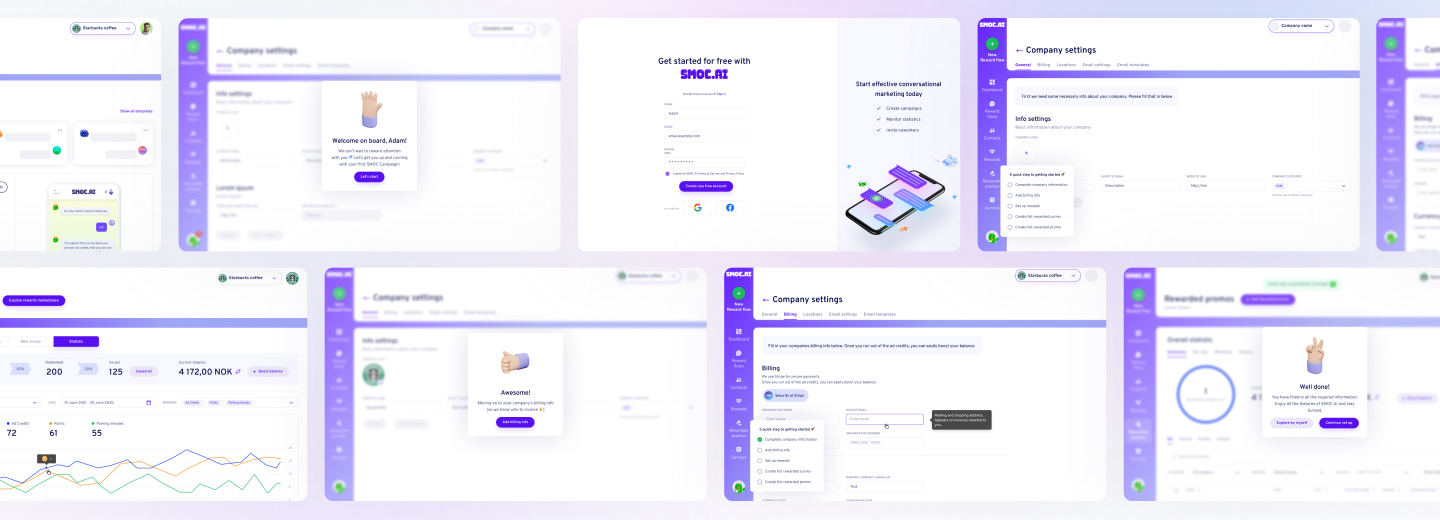
Scaling from Prototype into a User-Friendly and Conversational Marketing Platform
Your Partner is Your Foundation
In the startup world, speed is a badge of honor, but sustainable speed is the only thing that leads to an exit or an IPO. By choosing a partner that values strategic vision and offers the reliability of a dedicated outstaff team, you aren’t just buying hours you’re buying the ability to grow without breaking.
To help you vet a potential outstaffing partner, you need to look past their sales deck and dig into their operational DNA. Scaling requires a partner who is as invested in your uptime and code quality as you are.
Here is a comprehensive checklist of “Red Flags” and “Green Flags” to use during your interview process.
The Red Flag Checklist
If you encounter these during the discovery phase, it’s often a sign that the partner is better suited for simple “one-off” projects rather than a long-term scaling journey:
- The “Yes-Man” Syndrome: They agree to every deadline and every feature request without questioning the technical feasibility or the impact on your architecture.
- High Bench Turnover: If they can’t tell you the average tenure of their developers, they likely have a “revolving door” culture, meaning you’ll lose institutional knowledge mid-scale.
- Opaque Communication Channels: They insist on a “Project Manager” middleman for everything and discourage you from speaking directly to the developers on your outstaff team.
- Lack of DevOps Maturity: If they don’t mention CI/CD pipelines, automated testing, or infrastructure-as-code (IaC), they aren’t ready to help you scale.
- “Black Box” Pricing: Quotes that are suspiciously low or don’t break down senior vs. junior rates often hide a lack of senior-level expertise.
The “Scale-Ready” Green Flags
A strategic partner will demonstrate these traits, showing they understand the pressures of a growing startup:
- Proactive Risk Identification: During the first meeting, they identify potential bottlenecks in your current tech stack.
- Cultural Alignment: Their developers have a “product mindset” and ask about your business goals and user personas, not just the technical specs.
- Seamless Integration: They offer a clear plan for how their team will sync with your Slack, Jira, and GitHub workflows.
- Knowledge Documentation: They have a strict internal policy for documenting code and architectural decisions, ensuring you aren’t “locked in” by hidden complexity.
Scaling vs. Project Thinking
| Feature | Project-Based Vendor | Strategic Outstaff Partner |
| Primary Goal | Finish the “Build” | Support the “Growth” |
| Knowledge | Stays within the vendor | Integrated into your company |
| Flexibility | Rigid Change Orders | Agile Scaling/Pivoting |
| Ownership | They own the delivery | You own the process, they provide the talent |

Need Checking What Your Product Market is Able to Offer?
EVNE Developers is a dedicated software development team with a product mindset.
We’ll be happy to help you turn your idea into life and successfully monetize it.
Conclusion
The best way to test a partner is to start small but meaningful.
For a small digital startup, scaling is the ultimate test of your foundation. You don’t just need more hands on deck; you need a partner who can help you navigate the architectural complexities, security demands, and performance requirements that come with a rapidly growing user base.
Choosing the right outstaffing partner means moving beyond a simple “client-vendor” relationship and entering a strategic alliance. By prioritizing reliability, technical foresight, and a shared vision, you ensure that your technology accelerates your growth rather than hindering it.In the high-stakes world of digital startups, code is cheap, but strategic reliability is priceless. Invest the time now to find the team that doesn’t just work for you, but grows with you.
While often used interchangeably, they are fundamentally different:
Scaling is when revenue increases exponentially while costs increase only incrementally. This is the hallmark of a successful digital business model.
Growth refers to increasing revenue at the same rate you add resources (capital, people, or technology).
Scaling too early is the #1 cause of startup failure. You are ready to scale only when you have achieved:
Repeatability: You have a sales or marketing process that yields predictable results.
Product-Market Fit (PMF): Users are consistently finding value in your product.
Unit Economics: Your Customer Acquisition Cost (CAC) is significantly lower than your Lifetime Value (LTV).
Technical Debt: Code that was “hacked together” for the MVP may not handle high traffic.
Communication Silos: Information stops flowing freely between departments.
Culture Dilution: Hiring quickly can lead to a loss of the original company mission and values.
In the scaling phase, automation is mandatory. Any manual process — whether it’s customer onboarding, data entry, or software deployment — will eventually become a point of failure. If a task is performed more than five times a week, it is a candidate for automation.
About author
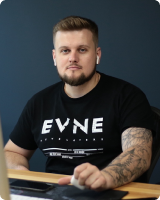
Roman Bondarenko is the CEO of EVNE Developers. He is an expert in software development and technological entrepreneurship and has 10+years of experience in digital transformation consulting in Healthcare, FinTech, Supply Chain and Logistics.
Author | CEO EVNE Developers