

 0
0


You are deciding between three very different ways to build software. Each can fuel a startup, each can stall it. The trick is matching your constraints to the model that compounds your advantage, not just the one that looks cheapest on paper.
I have spent a decade running delivery and product discovery for early teams and growth-stage companies. I have worn the founder hat, the CTO hat, and the partner hat. I have celebrated launches that saved quarters of runway, and I have watched leadership teams bleed time while searching for a unicorn senior engineer who never quite materialized. The patterns repeat, which is good news. It means you can make this decision with more clarity, less luck.
WHAT'S IN THE ARTICLE
What you are actually buying for development
You are not really buying code. You are buying speed, learning, and risk control. Code is the residue.
A startup must answer three questions, fast and with a clear audit trail of what was tried:
- What problem is worth solving
- What solution can win with this team and capital
- What system can scale without blowing up unit economics
That is why the delivery model matters so much. It changes the shape of your feedback loops, the cash burn, and who holds the risk when reality argues with the plan.
The three models at a glance
Early-stage startups fight three intertwined risks: market risk, product risk, and execution risk. Discovery gives you a way to cut those risks down before they balloon into cost, churn, and lost runway. It also creates a shared language between founders, designers, engineers, and investors.
Here is a practical snapshot drawn from real engagements across fintech, SaaS, and marketplaces.
| Dimension | Development Outsourcing | In-house Team | Freelancers |
| Time to start | 1 to 3 weeks | 3 to 6 months | 1 to 3 weeks |
| Predictability | High with mature partner | High after hiring | Low to medium |
| Unit cost | Higher hourly, lower for outcomes | Lower hourly on paper, higher total | Lowest hourly |
| Control | Shared with partner leaders | Full control | Per person, limited |
| Product thinking | Strong with product-led partner | Strong with seasoned PM/CTO | Varies by individual |
| Knowledge retention | Medium, needs process | High, if retention holds | Low, unless documented |
| Continuity | Contractual, replaceable roles | People risk, notice periods | High churn risk |
| Security/compliance | Partner can bring playbooks | You own the burden | You own and must enforce |
| Tooling/ops | Often bundled | You build and own | You assemble ad hoc |
| Culture fit | Imported rituals, shaped to you | Native culture building | Fragmented |
| Best for | Speed to MVP, parallel tracks | Long-term core product | Specialized tasks, spikes |

Looking to Build an MVP without worries about strategy planning?
EVNE Developers is a dedicated software development team with a product mindset.
We’ll be happy to help you turn your idea into life and successfully monetize it.
Development outsourcing that acts like a product team
Most founders think outsourcing equals body shopping. That is one model, and usually the wrong one. The healthier version assigns a cross-functional pod that can run discovery, delivery, QA, and DevOps in one cadence. Your job stays focused on outcomes and priorities, not task orchestration.
A strong partner should reduce variance, not add to it. You are paying for a production engine that already learned the hard lessons on estimates, release quality, and incident response. When you get this right, you compress time and increase the surface area of bets you can run in a given quarter.
Here is how I guide founders to assess partners fast:
- Proof of outcomes: Ask for shipped products, not portfolios of static screens.
- Product leadership: Meet the person accountable for decisions when tradeoffs bite.
- Team continuity: Confirm named roles and replaceability, not a list of CVs.
- Code ownership: Ensure IP, repos, cloud, and pipelines live in your org from day one.
- Transparency: Demand weekly demo, burndown, risk log, and cost-to-complete, every Friday.
- Runway fit: Set a fixed quarterly objective with a cap, then renegotiate with data.
The caveats are real. If the partner is only selling hours, you will manage a ghost team and own all product risk anyway. If you expect contractor rates to match FTE engagement, you will be disappointed. If your founder team will not spend time on prioritization and access to users, even a great partner ships fast in the wrong direction.
When it clicks, you gain speed to learning and consistent quality. That is usually what you need before product market fit, and again during heavy platform re-architecture when you cannot slow feature delivery.
In-house talent and the compounding curve
Owning a product for years favors an in-house team. Culture, domain depth, recruiting brand, and cross-functional intuition all compound. A senior engineer who has lived your incidents and customer pain for two years is worth more than any interchangeable resource. If you have time to hire and a technical leader who can attract A players, this path builds a defensible core.
The friction sits upfront. Great engineers with product sensibility are scarce, and your startup is one pitch among many. Expect a quarter or two to assemble the first four hires, which means your product roadmap should be resilient to that delay. The true cost is not the salary delta, it is the cost of delay on milestones that unlock the next round, a major customer, or a marketplace approval.
You also take on the entire operations stack. This includes security posture, incident runbooks, release automation, career paths, compensation bands, and a recruiting motion that does not consume all founder time. Worth it when you are past the first proof points. Painful when you are still guessing.
A hybrid approach often works best. Keep product, design, and a couple of full-stack engineers in-house, then use a partner to scale parallel streams. That gives you ownership where it matters and elasticity where it pays.
Freelancers and the spike model
Freelancers shine when you have very specific, bounded work. You need a Swift guru to optimize an iOS rendering issue. You need a data viz component built this month. You need a content migration.
Where they struggle is orchestration and continuity. If your product requires steady product thinking, cross-functional tradeoffs, and weekly releases, coordinating five freelancers will cost you more attention than it saves.
Key use cases that work well:
- Prototypes and proof-of-concepts
- Narrow skills you lack in-house
- Content, QA sweeps, marketing integrations
- Short-term migrations
- Interim coverage during hiring
If you go this route, overinvest in specs, code standards, and access control. Create a skeleton repo, CI, a staging env, and a checklist for onboarding and offboarding. Treat it like a relay race, not a pickup game.

Proving the Concept for FinTech Startup with a Smart Algorithm for Detecting Subscriptions
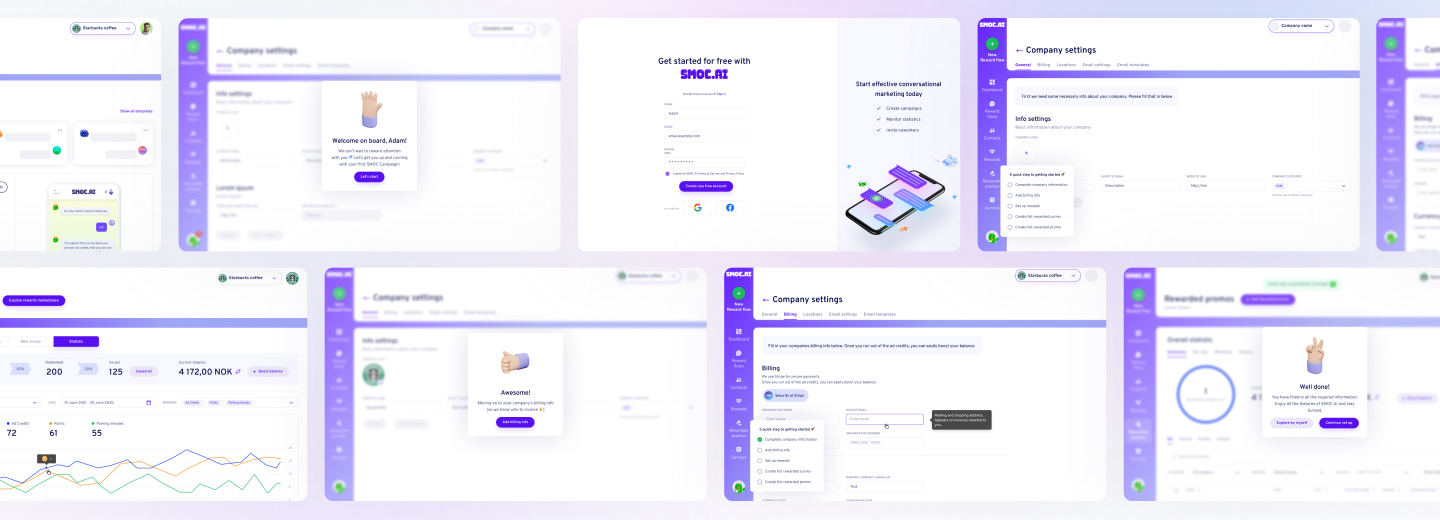
Scaling from Prototype into a User-Friendly and Conversational Marketing Platform
The real cost most teams miss
The metric that sways this decision is often not hourly rate, it is cost of delay. If a feature is worth 50 thousand dollars in monthly gross profit once live, a four month delay costs 200 thousand, no matter how you staff the work. The cheapest rate can be the priciest decision.
I often map scenarios like this:
Seed stage, two founders, no engineers hired. Outsourcing with a strong pod can launch an MVP in 8 to 12 weeks, while in-house hiring would push first release to month 6. The four month gap is often the difference between closing a lead investor or running out of runway.
Post-seed, CTO hired, core stack selected. Hiring two in-house engineers and adding a partner pod for a quarter lets you run platform work and new features in parallel. Freelancers cover a UI refactor and analytics tagging.
Series A, product market fit within reach. In-house team takes ownership of the core, partner handles migrations, test automation, and a growth loop experiment track so you can keep shipping while hiring.
Patterns that repeatedly work
I keep recommending a small set of patterns because they keep paying off.
- Core in-house, elastic pods: Product, design, tech lead in-house, with one or two engineers. Partner runs a pod aligned to a squad charter with shared rituals.
- Discovery with founders, delivery with partner: Founders and users map the problem and define success, the partner builds options quickly and validates with real traffic.
- Senior CTO plus freelancers, then replace with hires: Use a fractional or full-time CTO to set architecture, hire freelancers for narrow tasks, then convert the most valuable contributors to full-time or hand off to a partner with a clean code base.
These patterns keep strategic control close while converting uncertainty into shipped code without weeks of orchestration overhead.
What I tell founders in different stages
Pre-seed and no technical founder. Move with a partner who can bring product management, design, and engineering in one unit. Cap scope to a single convincing use case that a real buyer will pay for or a primary metric will reflect. Avoid building a platform. Document the learnings and prepare for a handoff later.
Seed with a technical founder. Hire two strong generalists, set clear working agreements, and bring in a partner pod to either harden the platform or accelerate a customer facing stream. Keep your engineers close to users, let the partner absorb test automation, infra, and parallel features.
Series A with traction. Invest in recruiting and culture. Keep a partner for elasticity during hiring and for nasty projects that would distract your core team. Use freelancers for short wins that are well scoped, then pay down the tech debt they create quickly.
If this matches your situation, I am happy to review your constraints and propose a 90 day plan. A short call and a few artifacts is all it takes to give you a clear path and a fixed cap for the first sprint.
What to ask before you sign anything
Picking a model is half the battle. The questions you ask shape outcomes.
- Ownership: Who owns repos, cloud accounts, IP, and accounts for third-party tools from day one
- Visibility: What weekly artifacts will I see, and how do we track risk, rework, and cost-to-complete
- Decision rights: Who decides when scope trades are needed to protect a date or quality
- Continuity plan: What happens if a key engineer leaves, and how fast can you replace them
- Security: How are secrets, credentials, and PII handled, and who audits the setup
- Exit plan: What is the 30 day handoff checklist if we move work in-house
If you do not get crisp answers, you are buying hope. That is expensive. You can make a sound call today with three questions.
What is the hardest constraint right now? If it is time, favor a partner to start shipping within weeks. If it is money with room for time, you can recruit. If it is skill gaps on a narrow domain, freelancers win.
Where do you need compounding knowledge? If the core algorithm, compliance posture, or customer onboarding is your edge, keep that in-house early. Pull in help for everything that is not your edge.
Who holds the risk when things change? If you need a single throat to choke for delivery, partners or an in-house team with a clear leader are your options. If your team can absorb orchestration risk, freelancers can fill gaps.
Write the answers down. Decide a 90 day plan. Revisit with data.
A note on culture and product thinking
The soft stuff drives the hard outcomes. The fastest teams share a few habits. They run weekly demos no matter how rough the build is. They keep a single queue for product work and tech work. They test with real users often. They do not turn sprint planning into calendar theater. They write one page decision docs, not novels. They lower the cost of change with small batches, not heroics.
You can enforce those habits with any model. I have seen tight culture inside partner teams, and I have seen in-house teams lose months to meetings. Decide the rituals you expect, then hold everyone to them.

Need Checking What Your Product Market is Able to Offer?
EVNE Developers is a dedicated software development team with a product mindset.
We’ll be happy to help you turn your idea into life and successfully monetize it.
Conclusion
First releases are loud. The real work starts the morning after. Your model should account for that. Create a quarterly theme and monthly outcomes. Keep one stream for product risk and one for platform risk. Do not let reactive requests absorb the entire bandwidth. Budget time for refactors. Keep metrics handy: cycle time, deployment frequency, change fail rate, and mean time to restore. Those four numbers will tell you if your model is compounding or dragging.
Set a date for a formal handoff if you plan to internalize everything. A clean handoff packs documentation, diagrams, runbooks, infra as code, and a debrief of what did not work. Pay for that explicitly. It is cheaper than learning it all over again.
Keep all repos, cloud accounts, CI pipelines, and third-party licenses in your organization. Require infra as code and documentation. Agree on a 2 week shadow period where your engineer pair-programs with theirs before any staffing change.
When the work is continuous, core to your edge, and will benefit from deep domain context over time. If you will keep iterating on it for a year, hire. If it is a one quarter push, consider a partner or freelancer.
Track cycle time, deployment frequency, change fail rate, and mean time to restore. Pair those with two business metrics tied to your current bet, like activation rate or time to value. If quality holds and cycle time shortens, you picked well.
Provide a small design system, coding standards, a CI pipeline, and a definition of done. Break work into one week chunks with a demo every Friday. Limit concurrent freelancers to what you can review in an hour.

About author
Roman Bondarenko is the CEO of EVNE Developers. He is an expert in software development and technological entrepreneurship and has 10+years of experience in digital transformation consulting in Healthcare, FinTech, Supply Chain and Logistics.
Author | CEO EVNE Developers