

 0


AI is changing software delivery, but not in the way many teams feared a year ago. The strongest results are not coming from companies that hand work over to a model and hope for the best. They are coming from teams that use AI to cut low-value effort, speed up feedback, and keep experienced people focused on the decisions that matter.
That distinction matters for product leaders. Faster outputs only help when they move a product toward validation, release quality, and measurable business metrics. If they do not, AI just helps a team produce the wrong thing faster.
Recent data points in that direction. GitHub’s Octoverse 2024 reported more than 70,000 new public and open source generative AI projects created in 2024, with total contributions to generative AI projects up by almost 60%. McKinsey’s 2024 study with 40 product managers across the United States, Canada, Europe, and Latin America framed generative AI around higher productivity, better quality, and a better working experience for product teams. That is a very different story from replacement.
WHAT'S IN THE ARTICLE
- 01AI-assisted product discovery reduces time to a testable plan
- 02AI-assisted engineering accelerates coding, review, and debugging
- 03AI-assisted QA catches issues sooner and strengthens release confidence
- 04Product outcomes with AI-assisted development depend on discovery and team review
- 05How to adopt AI-assisted development without losing control
- 06Metrics to track in the first 90 days of AI-assisted development
- 07Conclusion
AI-assisted product discovery reduces time to a testable plan
Product discovery often slows down long before engineering starts. Teams spend days turning meeting notes into requirements, writing user stories, grouping feedback, drafting acceptance criteria, and rewriting the same ideas in different formats for different stakeholders.
AI is useful here because much of this work starts as pattern recognition and first-draft writing. A model can turn raw interview notes into themes, convert feature requests into jobs-to-be-done statements, draft PRDs, summarize user pain points, and propose test scenarios for early validation. That compresses the time between “we think this matters” and “we can test this with users.”
Still, AI should not decide what to build. Discovery is not a documentation exercise. It is a risk-reduction exercise. Teams still need product judgment to decide which problem is worth solving, which assumptions are dangerous, and which user segment is urgent enough to target now.
A practical way to split the work looks like this:
- AI is strong at: first drafts, clustering feedback, rewriting notes, drafting stories, summarizing interviews
- People are still needed for: market judgment, prioritization, pricing logic, risk calls, stakeholder tradeoffs
- Best combined use: AI produces a draft in minutes, the team reviews it against evidence and business goals
Interactive prototypes make AI-assisted product discovery more useful. AI can help create flows, draft copy, and even generate wireframe ideas, but clickable prototypes are still where many product assumptions get tested.
Case work from EVNE Developers shows why that matters. In one early-stage volunteering platform project, the team identified the need for ongoing discovery and scope changes early, then created interactive prototypes and detailed documentation to test and refine the user experience before pushing deeper into build. The platform later reached 200 participating communities in a month and delivered a solution that handled requests 3x faster.
That result did not come from AI alone. It came from using speed in the right place: validating flows, revising scope early, and reducing rework before code hardened the wrong assumptions.
Faster delivery without product validation still creates waste. AI can shorten discovery tasks, but it cannot confirm product-market fit.

Looking to Build an MVP without worries about strategy planning?
EVNE Developers is a dedicated software development team with a product mindset.
We’ll be happy to help you turn your idea into life and successfully monetize it.
AI-assisted engineering accelerates coding, review, and debugging
In engineering, AI is at its best when the task has a clear structure. That includes scaffolding boilerplate code, drafting unit tests, generating API clients, suggesting refactors, writing migration scripts, and summarizing large code blocks during reviews.
This is one reason adoption has moved so fast. Engineers do not need a complete rewrite of their workflow to get value. They can use AI inside the IDE, during PR review, in debugging sessions, or while documenting a service. The gain is often simple: fewer blank-page moments, fewer repetitive tasks, and shorter cycles between intent and implementation.
GitHub’s 2024 data supports the scale of that shift. Generative AI project activity is growing rapidly, and the wider developer community is clearly treating AI as part of the toolchain, not a side experiment.
The boundary is just as important as the benefit. AI can suggest code. It cannot own system architecture, long-term maintainability, domain-critical logic, or production risk decisions. Teams building in regulated products healthcare, fintech, insurance, energy, and other regulated environments need experienced engineers to review every high-impact change, especially when privacy, compliance, or auditability are involved.
| Workflow area | AI can speed up | Team still owns |
| Backlog to code | Boilerplate, handlers, DTOs, CRUD scaffolds | architecture fit, naming, domain logic |
| Code review | change summaries, issue spotting, comment drafting | merge decisions, standards, security judgment |
| Debugging | log summaries, likely root causes, reproduction hints | final diagnosis, fix strategy, regression risk |
| Documentation | API docs, onboarding notes, release summaries | accuracy, completeness, business context |
| Refactoring | repeated pattern cleanup, test scaffolds | service boundaries, performance tradeoffs |
A healthy engineering posture is not “let AI write the app.” It is “let AI remove repetitive friction so senior people spend more time on decisions that affect speed, quality, and future cost.”
AI-assisted QA catches issues sooner and strengthens release confidence
QA is one of the clearest examples of augmentation over replacement. AI can help draft test cases, propose edge scenarios, flag inconsistent requirements, summarize failed test logs, and support regression prioritization. That is real value, especially when release cycles are tight.
Security gives another strong example. GitHub reported that secret scanning detected more than 39 million secret leaks in 2024. That kind of automated signal matters because it helps teams catch risky mistakes before they turn into incidents.
Yet QA is not just test execution. It is release confidence. It covers expected behavior, broken flows, compliance conditions, usability issues, data integrity, and the messy edge cases that show up when real users behave in ways no one predicted.
The teams that get the most from AI in QA tend to use it for acceleration, not sign-off. They let automation widen coverage and shorten feedback loops, then keep human QA focused on critical paths, acceptance review, and risk-based testing.
A simple rule works well here:
- regression coverage
- test data setup
- bug report summaries
- acceptance review
- exploratory testing
The first three are great places for AI support. The last two still need people who know the product, the user, and the release risk.

Proving the Concept for FinTech Startup with a Smart Algorithm for Detecting Subscriptions
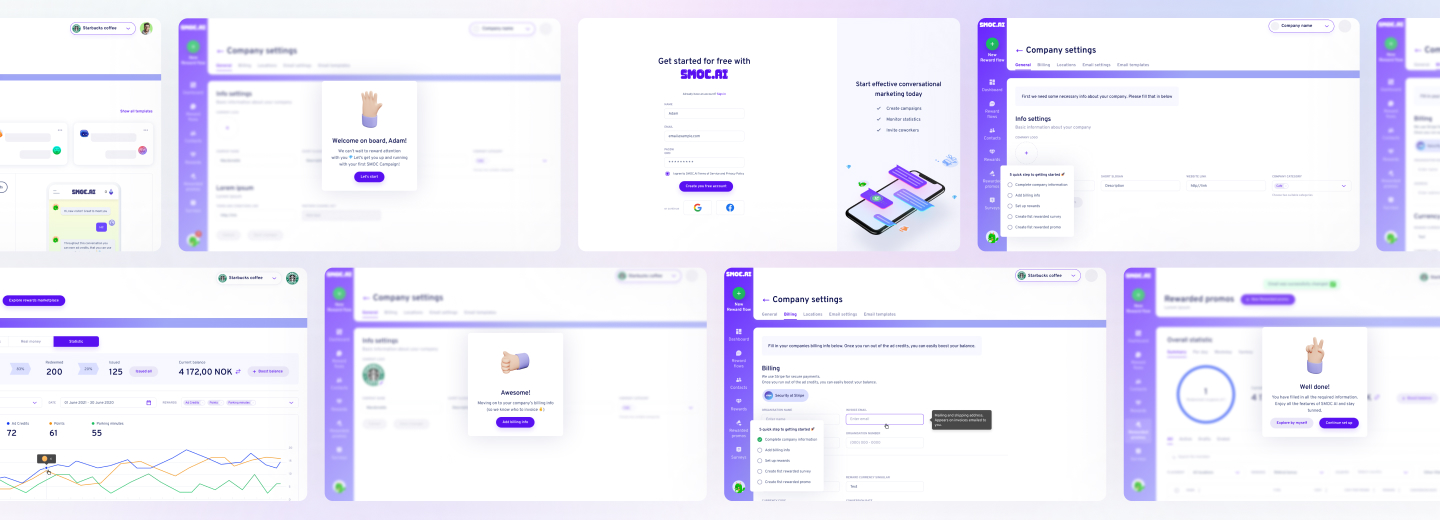
Scaling from Prototype into a User-Friendly and Conversational Marketing Platform
Product outcomes with AI-assisted development depend on discovery and team review
The biggest mistake in AI discussions is treating speed as the primary result. Speed matters, but only if it moves a business metric.
Case results from EVNE Developers show the difference. An AI-powered car accident reporting platform reduced client settlement time by 30% and improved insurance reports by 60%. An automated ESG reporting platform cut manual input activity by 75%. In other projects, website work doubled membership growth in one case and doubled conversion rate in another.
Those are business outcomes, not just technical outputs. They also point to a broader truth: good results come from pairing AI with product thinking, delivery discipline, and measurable goals. In another EVNE project, a DeathTech MVP for a conservative market was built with user research, custom development, DevOps, and QA after earlier freelancer-based iterations had repeated the same core flaws and wasted time. AI can speed tasks inside that process. It does not replace the process.
That is the real operating model many teams need. Use AI to compress drafting, coding support, and feedback loops. Keep humans in charge of product choices, architecture, security, compliance, and release standards.
How to adopt AI-assisted development without losing control
Many teams do not fail with AI because the tools are weak. They fail because they start too wide, apply AI to the wrong tasks, or skip governance until problems appear. A stronger rollout starts with a small set of high-frequency workflows where cycle time matters and errors are easy to review. Think story drafting, test creation, PR summaries, bug triage, or support for documentation. These are repeatable tasks, easy to compare before and after adoption, and much safer than handing over major design decisions.
A practical rollout usually includes a few non-negotiables:
- Start with bottlenecks: pick the workflows that slow delivery every sprint
- Keep review visible: require human approval for code, tests, and requirement changes
- Measure impact: track lead time, rework, escaped defects, and time spent in review
- Protect sensitive data: set rules for where prompts, logs, and code can go
- Use domain experts early: regulated products need legal, security, and QA input from day one
This is also where a product-first development partner can help. Teams that already combine discovery, rapid MVP delivery, QA, and business analysis are in a better position to apply AI without losing control of the roadmap or the release process. The goal is not tool adoption for its own sake. The goal is faster learning and better outcomes.
Metrics to track in the first 90 days of AI-assisted development
If a team cannot measure whether AI is helping, the rollout will drift into opinion. The first 90 days should focus on operational metrics tied to delivery quality.
Track the time it takes to move from idea to validated scope. Track how long story refinement takes before and after AI support. Track PR cycle time, bug triage time, defect escape rate, test authoring time, and how much rework appears after review. Then connect those operational changes to business metrics, whether that means faster launch timing, fewer production issues, or lower manual effort in core workflows.
That is how AI becomes a useful delivery multiplier instead of a noisy layer on top of the stack. It gives product managers, engineers, and QA specialists more room to do the work only they can do, while the routine parts of the lifecycle move faster and with less drag.

Need Checking What Your Product Market is Able to Offer?
EVNE Developers is a dedicated software development team with a product mindset.
We’ll be happy to help you turn your idea into life and successfully monetize it.
Conclusion
AI-assisted development is transforming the way teams approach product discovery, engineering, and QA. Rather than replacing skilled professionals, AI acts as a powerful accelerator by streamlining workflows, reducing manual effort, and enabling teams to focus on high-value, creative problem-solving. By integrating AI into your development process, you can achieve faster time-to-market, improved product quality, and a more agile response to changing business needs. Embracing AI is not about replacing your team; it’s about empowering them to deliver their best work.
AI-assisted development refers to the use of artificial intelligence tools and technologies to support and enhance the software development lifecycle, including product discovery, engineering, and quality assurance.
No. AI is designed to augment and accelerate the work of human teams, not replace them. It automates repetitive tasks and provides insights, allowing professionals to focus on complex and creative challenges.
AI can analyze large datasets, identify user needs, and suggest new features or improvements, helping teams validate ideas and prioritize work more efficiently.
Most modern AI tools are designed for easy integration with popular development environments and CI/CD pipelines, making adoption straightforward for most teams.

About author
Roman Bondarenko is the CEO of EVNE Developers. He is an expert in software development and technological entrepreneurship and has 15+years of experience in digital transformation consulting in Healthcare, FinTech, Supply Chain and Logistics.
Author | CEO EVNE Developers