

 0


Startups rarely need a rescue partner because everything is going well. They usually start looking when velocity has collapsed, confidence is low, and every new estimate feels less believable than the last one.
That moment is expensive, but it is still recoverable if the right team steps in early, audits the real state of the product, and rebuilds delivery around facts instead of assumptions.
WHAT'S IN THE ARTICLE
- 01Why software project rescue matters for startups
- 02Common software project failure causes and rescue triggers
- 03What the best software project rescue companies for startups actually do
- 04How to evaluate software project rescue companies for startup fit
- 05Questions startups should ask before hiring a software project rescue company
- 06Conclusion
Why software project rescue matters for startups
A stalled software project hurts any business, but startups feel the damage faster. Time, cash, and team focus are limited. Research on early-stage software startups has pointed out that scarce resources make failed projects especially dangerous, and in some cases a single failed product effort can threaten the company itself. That is why software project rescue is not just an engineering service. It is a business continuity move.
The warning signs often show up long before a project is formally called “at risk.” After a few weeks of missed targets, founders usually see the same pattern: the backlog keeps growing, demos are thin, bugs come back after “fixes,” and no one can clearly explain what will ship next or how long recovery will take. When that pattern continues, a rescue partner becomes less of a nice-to-have and more of a practical step to protect runway.
Common rescue signals include:
- Missed release dates
- Unclear requirements
- Poor or missing documentation
- Weak code quality
- Rising rework
- A product that does not match business needs
- Vendor turnover
- Budget burn without measurable progress
Common software project failure causes and rescue triggers
The most repeated failure drivers across public and industry sources are not mysterious. They are operational. The Project Management Institute has long identified changed specifications, unrealistic scheduling, weak resource allocation, poor information management, and poor requirements definition as recurring failure factors. Those same issues show up in startup teams every day, just under faster timelines and tighter budgets.
The public sector sees a similar pattern. The U.S. Government Accountability Office says modernization plans should include milestones, a description of the work, and details about the legacy system’s disposition. When those basics are incomplete, the risk of cost overruns, schedule delays, and project failure goes up. That guidance applies just as well to startups replacing a fragile MVP or rebuilding an inherited platform.
When founders say, “We need a rescue,” they are often describing one of these root problems without naming it directly.
| Failure pattern | What it looks like in a startup | What a rescue company should do |
| Weak requirements | Features built fast but not used, repeated changes, unclear acceptance criteria | Reframe scope around user outcomes, business rules, and release priorities |
| Poor documentation | No system map, no reliable handoff, slow onboarding for new engineers | Reconstruct product docs, architecture notes, and decision logs |
| Unrealistic scheduling | Dates set before complexity was known, constant deadline slips | Re-estimate by milestones and separate urgent fixes from core rebuild work |
| Poor information management | Teams disagree on status, blockers, and ownership | Set reporting cadence, delivery metrics, and escalation paths |
| Legacy or unstable code | Fragile releases, hidden dependencies, frequent regressions | Run a code audit, isolate critical risks, and plan staged stabilization |

Looking to Build an MVP without worries about strategy planning?
EVNE Developers is a dedicated software development team with a product mindset.
We’ll be happy to help you turn your idea into life and successfully monetize it.
What the best software project rescue companies for startups actually do
The best rescue partners do not begin with a promise to “move faster.” They begin with diagnosis. That usually means a short, sharp review of the codebase, infrastructure, backlog, product goals, testing coverage, delivery process, and documentation quality.
Then they make the situation legible. That sounds simple, but it is often the turning point. Rescue work succeeds when founders can finally answer four questions with confidence: what is broken, what still works, what can ship soon, and what should be cut.
A credible rescue company should also reset expectations around milestones. That matters because a recovery plan without delivery checkpoints is just another optimistic plan. Strong rescue teams break work into measurable phases, define dependencies early, and show how the current system will be stabilized, replaced, or retired.
Technical audit and documentation recovery in software project rescue
A technical audit is more than code review. In rescue projects, it should identify production risks, hidden architectural debt, deployment issues, test gaps, security concerns, and external service dependencies. If the product is in a regulated or high-risk category, the audit should also flag compliance exposure and data-handling issues.
Documentation recovery matters just as much. Many struggling projects do not fail because the team lacks talent. They fail because the product exists only in Slack threads, memory, and half-finished tickets. Once key people leave, delivery slows to a crawl.
This is one area where a structured rescue process stands out. On the software project rescue service page, you can find the description of the process that includes system and documentation analysis, a defined rescue strategy, cost and risk assessment, roadmap creation, and post-release support during the first month after launch. That structure reflects what startup teams usually need most: clarity, prioritization, and a realistic path back to delivery.
Roadmaps, milestones, and release control in startup rescue projects
Rescue teams also need product judgment, not only technical skill. Startups do not have the luxury of rebuilding everything at once. A good partner identifies what must be stabilized now, what can wait, and what should never have been built in the first place.
That usually leads to a phased roadmap:
- Phase 1: Stop active production risk and restore release confidence
- Phase 2: Recover documentation, backlog quality, and team workflow
- Phase 3: Ship the highest-value product milestones
- Phase 4: Refactor or modernize the parts that block scale
The best companies keep those phases tied to business outcomes. If the startup needs investor traction, the rescue plan should focus on a usable MVP or visible product progress. If churn is rising, customer-facing defects and usability gaps should move to the top of the queue. If the system is failing operationally, stability comes before feature expansion.

Proving the Concept for FinTech Startup with a Smart Algorithm for Detecting Subscriptions
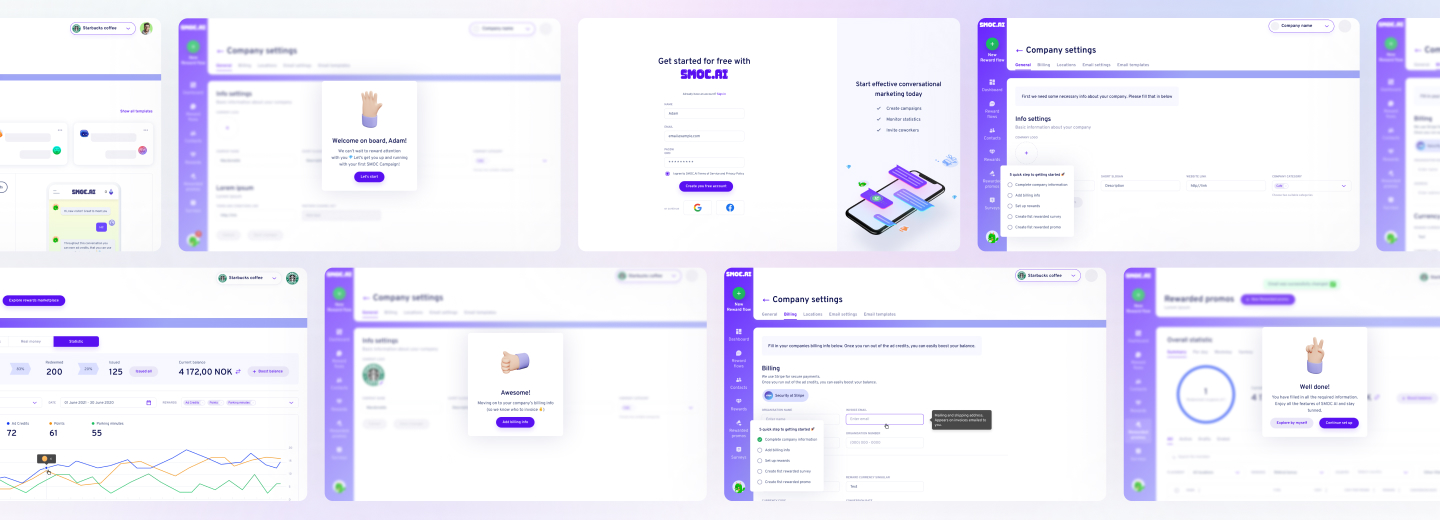
Scaling from Prototype into a User-Friendly and Conversational Marketing Platform
How to evaluate software project rescue companies for startup fit
Not every development firm is a rescue firm. Rescue work requires a different operating model: stronger diagnostics, better communication under pressure, cleaner prioritization, and more comfort stepping into messy environments.
Startups should screen potential partners for direct rescue experience, not just general software development credentials. A nice portfolio is not enough. The right team should be able to explain how they handle missing documentation, inherited code, partially built products, unrealistic schedules, and stakeholder mistrust.
Useful evaluation criteria include:
- Audit depth: Can they assess code, architecture, infrastructure, product scope, and delivery process in one review?
- Startup pragmatism: Will they protect runway by focusing on the smallest path to restored momentum?
- Documentation discipline: Do they rebuild specs, technical notes, and release plans as part of the rescue?
- Milestone clarity: Can they define phased delivery with dates, dependencies, and risk assumptions?
- Communication model: Will founders get direct visibility into blockers, tradeoffs, and weekly progress?
- Regulated-domain readiness: Can they work with compliance, privacy, and security constraints when the product requires it?
- Post-rescue support: Do they stay through release stabilization or disappear after handoff?
Price matters, but price without rescue structure is a false economy. A cheaper team that simply keeps coding inside a broken process can extend the damage.
Questions startups should ask before hiring a software project rescue company
A rescue engagement should begin with hard questions, not a sales pitch. Founders need a partner that is comfortable being direct about risks, tradeoffs, and likely recovery time.
Before signing, ask for specifics.
- What will you review in the first audit, and how long will it take?
- What are the most common rescue patterns you see in inherited startup projects?
- How do you handle missing or unreliable documentation?
- What will the first 30, 60, and 90 days look like?
- How do you decide what to stabilize, cut, rebuild, or defer?
- What delivery metrics will you report every week?
- How do you manage transition risk if the current vendor or team is still involved?
- What support do you provide after the first rescued release goes live?
Strong answers should sound grounded and operational. If the team cannot explain how it handles uncertainty, it is probably not a rescue specialist. A startup in rescue mode does not need more promises. It needs a partner that can turn ambiguity into milestones, repair trust in delivery, and get the product back to measurable progress.

Need Checking What Your Product Market is Able to Offer?
EVNE Developers is a dedicated software development team with a product mindset.
We’ll be happy to help you turn your idea into life and successfully monetize it.
Conclusion
Choosing the right software project rescue company can make the difference between a failed project and a successful turnaround. Startups facing stalled or troubled software initiatives should act quickly to engage experienced rescue partners who can assess, strategize, and deliver results. By leveraging the expertise of top software project rescue companies, startups can regain momentum, control costs, and achieve their business objectives with confidence.
For startups that need a partner with both product delivery and rescue experience, EVNE Developers fits the profile well. The company has more than 11 years of experience rescuing software projects and building digital products. We reflect the discipline rescue work demands: analysis first, then strategy, risk and cost review, roadmap definition, and release support.
That matters because startups often need a partner that can do two things at once: stabilize a troubled product and keep business momentum alive. Public case materials show that approach in practice. In one early-stage startup case, the team worked with limited existing documentation and used an investigative approach while planning for ongoing discovery, UX improvements, adaptation to change requests, and scalable engineering. The reported output was not just code, but also prototypes, an admin panel, and documentation strong enough to support the MVP.
Another published startup case describes an MVP-first delivery model designed to support fundraising. Parallel development helped reduce total development time and speed launch, and that the client secured a pre-seed round after implementation. For founders, that is the key point: rescue work is not only about fixing what is broken. It is about restoring the product’s ability to move the business forward.
Software project rescue is the process of intervening in a struggling or failing software project to identify issues, realign goals, and implement solutions that bring the project back on track.
Startups should consider a project rescue company when they experience missed deadlines, budget overruns, poor code quality, unclear requirements, or communication breakdowns within their development team.
These companies typically start with a thorough assessment, identify root causes of project issues, create a recovery plan, and then execute the plan with clear milestones and transparent communication.
Benefits include expert diagnosis, rapid problem-solving, improved project management, risk mitigation, and a higher likelihood of project success.

About author
Roman Bondarenko is the CEO of EVNE Developers. He is an expert in software development and technological entrepreneurship and has 15+years of experience in digital transformation consulting in Healthcare, FinTech, Supply Chain and Logistics.
Author | CEO EVNE Developers