

75% less
Norway
GreenTech
About the client
The client is a leading European industrial manufacturing firm operating a complex global supply chain, underpinned by a strong corporate commitment to sustainable operations. Following the introduction of the Corporate Sustainability Reporting Directive (CSRD) in the EU, the company faced a strict legal mandate to provide transparent, highly accurate, and audit-ready data regarding their carbon footprint and social governance initiatives.
With thousands of critical data points spread across multiple international manufacturing facilities, warehouses, and corporate offices, the client required a robust digital infrastructure capable of consolidating complex, siloed environmental metrics into a single, reliable source of truth.
Challenge
The primary obstacle was “Data Fragmentation.” Sustainability metrics were being tracked manually using disconnected spreadsheets across different departments—logistics, energy management, and HR. This manual process was not only prone to human error but was also impossible to audit at scale.
Key challenges included:
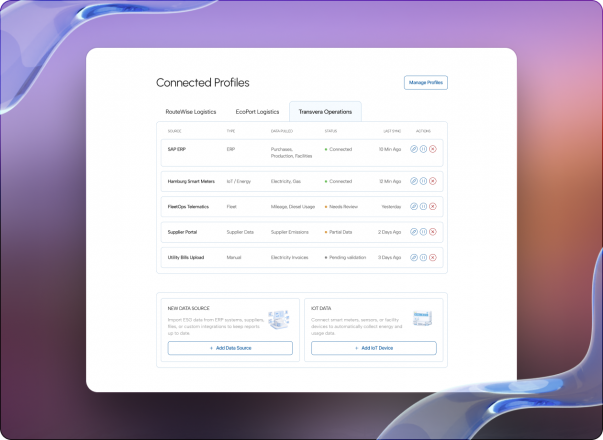
- Integration Complexity: Data needed to be pulled from various legacy ERP systems and IoT-enabled utility meters.
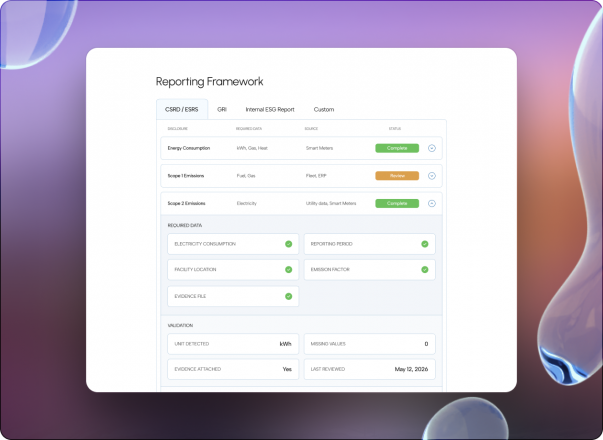
- Regulatory Rigidity: The software had to strictly adhere to evolving EU reporting standards to avoid significant non-compliance penalties.
- Tight Deadlines: The system needed to be operational and validated ahead of the upcoming fiscal reporting cycle.

Solution
We engineered a highly secure, cloud-native SaaS platform specifically designed to automate the end-to-end ESG (Environmental, Social, and Governance) reporting lifecycle. Recognizing the client’s aggressive global growth trajectory and the sheer volume of data involved, the solution was built utilizing a modular microservices architecture. This ensured high availability, seamless horizontal scalability, and the agility to deploy updates without system downtime.
This is a “must-have” rather than a “nice-to-have” in the EU market, providing a stable, long-term product type that goes beyond standard business apps. Given the sensitivity of global supply chain data, the platform was fortified with AES-256 encryption both at rest and in transit. We ensured strict adherence to international data sovereignty laws (including GDPR), guaranteeing that European facility data was processed and stored strictly within EU-based cloud regions.
Technical highlights included:
Steps to Achieve Results
Our partnership was defined by a proactive, “consultative engineering” approach. We moved beyond simple execution to act as strategic advisors.
Strategic Discovery & Mapping
We initiated the project with a comprehensive, two-week discovery phase, embedding our business analysts and data architects directly alongside the client’s internal sustainability officers and IT personnel. During this period, we conducted in-depth stakeholder interviews and audited existing legacy systems to trace the exact origin points of all environmental data. By meticulously mapping these fragmented data flows, ranging from manual spreadsheets to automated IoT sensors, we identified critical compliance gaps and designed a unified data architecture tailored to strict CSRD requirements.
Agile Iterative Development
To manage the tight regulatory deadlines, we adopted a highly iterative Agile methodology structured around two-week delivery sprints. We strategically prioritized the engineering and release of a Core Minimum Viable Product (MVP) centered exclusively on Scope 1 and Scope 2 carbon emissions tracking. This phased rollout allowed the client’s facilities to begin live data ingestion and staff onboarding immediately. Concurrently, our backend teams built, tested, and integrated the more nuanced social, governance, and supply chain tracking modules in the background.
Transparent Communication Architecture
We implemented a robust, high-bandwidth communication architecture to ensure absolute alignment across all distributed technical and business teams. This ecosystem was anchored by daily asynchronous status updates, interactive weekly technical deep-dives, and milestone reviews with executive stakeholders. By utilizing a shared, cloud-based project management workspace, we provided the client with 100% real-time visibility into development velocity, sprint backlogs, and budget utilization, fostering a high-trust environment that enabled rapid decision-making
Rigorous Validation & UAT
Recognizing that data accuracy was a legal imperative, we designed a stringent, multi-tiered testing and validation protocol. We facilitated extensive User Acceptance Testing (UAT) sessions, working hand-in-hand not just with system end-users, but specifically with the client’s internal compliance auditors. We simulated diverse reporting scenarios and data edge-cases to stress-test the compliance engine. This rigorous scrutiny ensured that the underlying logic and algorithmic calculations for carbon footprints were absolutely bulletproof, fully traceable, and strictly aligned with global standards.
Value Delivered
100% Regulatory Compliance:
The client successfully generated and submitted their first CSRD-aligned report well ahead of the legal deadline. Thanks to the platform’s immutable data lineage and rigorous calculation engine, external auditors identified zero data discrepancies. This transparency drastically reduced the time, friction, and billable hours typically associated with third-party enterprise compliance audits.
75% Reduction in Manual Labor:
By fully automating complex data collection, aggregation, and formatting, the client eliminated their reliance on hundreds of siloed, error-prone spreadsheets. This allowed the sustainability team to successfully transition their daily focus from acting as administrative “data hunters” to strategic “data analysts.” The enterprise saved thousands of man-hours annually, reallocating that human capital toward developing actual carbon-reduction strategies.
Real-Time Strategic Insights:
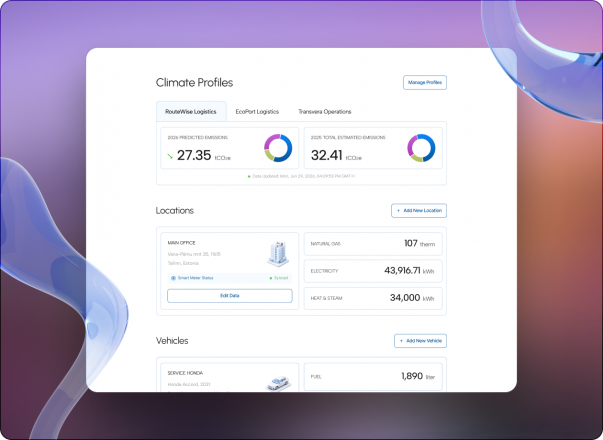
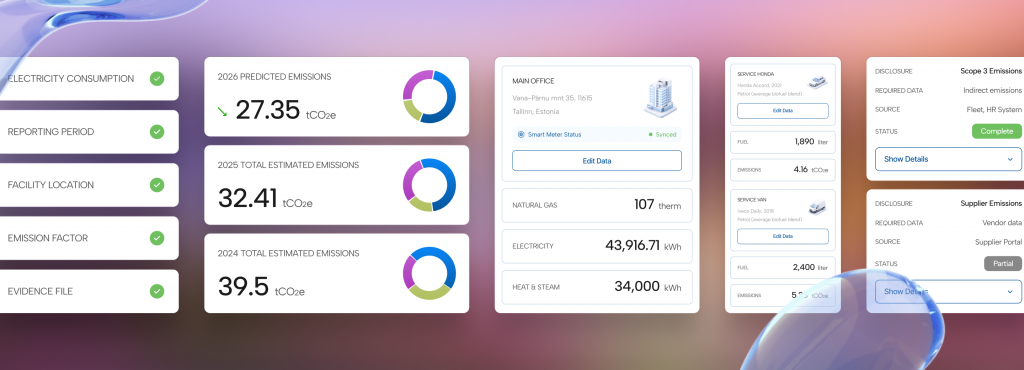
For the first time in the company’s history, executive leadership gained the ability to view global carbon intensity metrics in real-time. This visibility highlighted operational inefficiencies that were previously hidden. By identifying specific manufacturing lines and facilities with disproportionate energy draws, leadership was able to make proactive, data-driven decisions regarding equipment upgrades and energy procurement, directly reducing overhead costs.
Future-Proof Architecture:
The platform’s underlying microservices infrastructure is specifically built to adapt. As international sustainability standards continue to evolve, the modular architecture allows for new compliance frameworks (such as biodiversity tracking or emerging regional climate laws) to be integrated as isolated modules. This eliminates the need for expensive “rip-and-replace” system overhauls, ensuring a remarkably low Total Cost of Ownership (TCO) over the software’s lifecycle.
With audit-ready data instantly accessible, the client was able to proactively share verifiable sustainability metrics with major investors, B2B partners, and the public. This strengthened their brand equity and secured their position in the supply chains of larger partners who strictly mandate eco-friendly vendor practices.
EVNE Developers have the skills and experience required to create advanced software tailored to your needs. Hire us to build secure, scalable, and compliant solutions that streamline processes, improve outcomes, and leverage your data effectively.

