7
Agile
20+
58
About
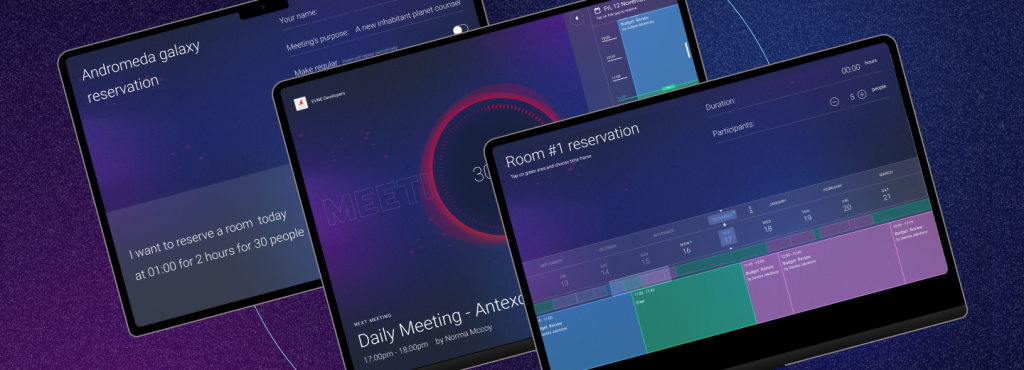
Delibroom as a system of applications for smartphones and tablets was developed by the company for their internal meeting room management. After a short analysis on how much time spend for meeting arrangement and how much frustrating stolen meeting rooms can be, they decided to create a digital tool making the processes automated. It serves as a comprehensive business tool allowing management of office premice as well as combined working from a home office.
Challenge
Development of a convenient and easy-to-use tool to allow users to organize in-house meetings and monitor planned meetings. Simultaneously, the tool needed to be easy to support and deploy without additional services, resources, and infrastructure by non-technical users. Another goal required the product to have maximum flexibility for customization, and low implementation costs in order to be suitable for companies and teams of any size.
Solution
A thorough analysis of the tools was based on technology consulting and revealed similar solutions that are presented to the target market. Highlighting their strong and weak points for the creation of a roadmap of the future system. Creation of an outstanding branding system for delivery of the unique value and vibes.


Analysis
The analysis revealed the dropbacks of the main competitors: Inability to work without third-party services or additional infrastructure; Complicated processes for booking and managing meeting rooms; Inability to monitor planned meetings or to book a meeting on the fly outside the office.The plan for the future product included the architecture basic composition, features roadmap implementation, risk evaluation and branding composition. In order to simplify the process of booking meeting rooms and amplify convenience, the mobile applications became the basis of the system.
Phone Dev
Totally custom mobile application included the technological solutions for a company team management. Security and data privacy means were placed in priority. In the stage of prototype creation, the identity branding system was developed together with the visual representation of the system interfaces. The model of generalised user experience represented with the prototype, passed A\B testing by the target groups of users. The analysis of their feedback made corrections in the initial user flow for a better receipt of the apps by the target audience. Smartphone app was made with Flutter technology for any platform. After throughout testing, the app was launched in the market.
Tablet Dev
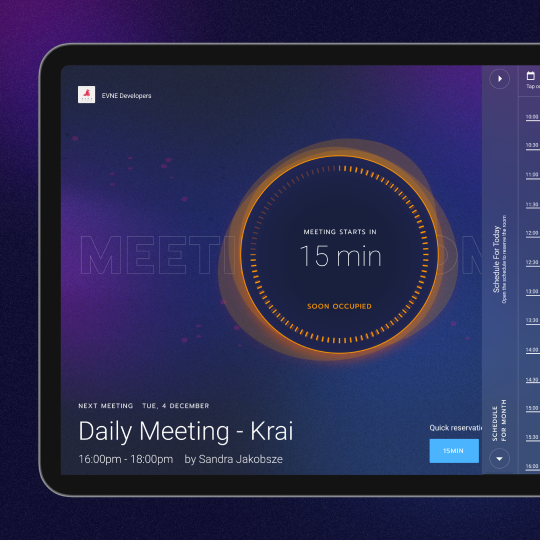
Tablet applications should serve as supplementary tools that improve the quality of meeting room management. These applications have separate functional scopes and user experience models as they are used under non-similar conditions if compared with smartphone applications. As a result, they should create a unified system, comfortable for both, remote and office staff. The pairing of the applications was planned as instant to reduce the time needed for this option and improve user-friendliness. In addition to basic apps, the system received the promotional landing for better user support and services promotion.