9
Agile
15+
Norway
About
The customer’s company being a rather big manufacturing facility with risk-embedded processes required a complex Learning Management System to cover internal needs and satisfy the regulatory requirements in full. The product had to improve staff experiences with multiple content types, interactivity, and satisfaction with accessibility standards and replace the old table work and non-centralised training materials. Which by presumed calculations had to reduce the employee attrition rates by at least 5% as the result of LMS development services brought by the team.
Challenge
After performing an audit of their manufacturing facilities, the customer revealed the weak points in the ununified and paper-based system of internal training. So they defined particular gaps and calculated their cost to the company. It was decided to move to the development of the corporate LMS to suit not only regulatory requirements in full but also improve the company’s key parameters and manufacturing security. In such a way the system had to cover all the aspects of their services and deliver reliable quality and security levels.
Solution
Developed LMS would help with the reduction of time spent on education through digital delivery of enterprise software. Moreover, such a digital approach should suit every kind of user regardless of their experience and proficiency with digital technology. These together could not only reduce expenses but also reduce risks on the manufacture and all related with that cost.


Design
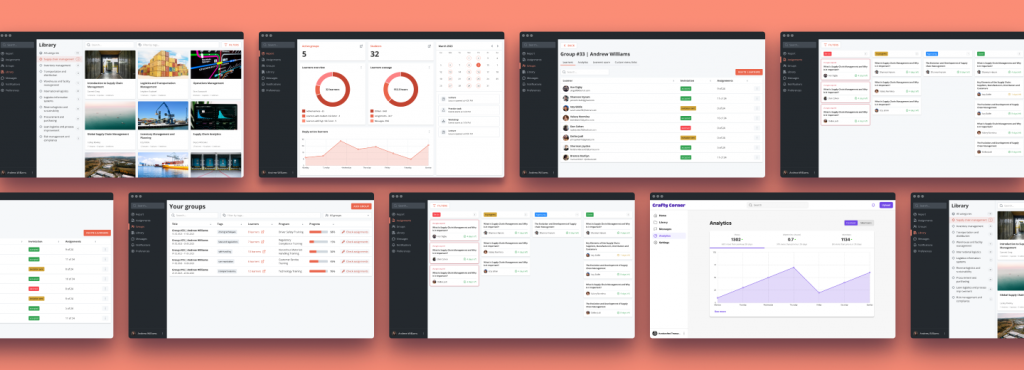
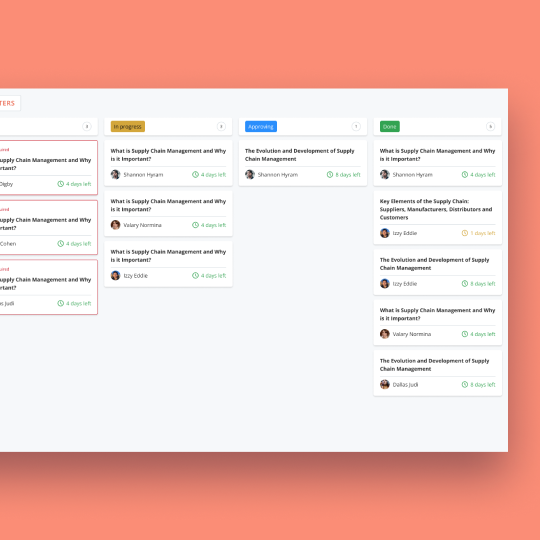
The development started with prototype and basic architecture creation to select the appropriate means covering all customer’s requirements – regulatory and internal. The basic engagement was improved with an algorithm suggesting engaging content based on the upskilling employees are looking to do or when they have to pass another recurrent training. The finalised result of the education is gathered into skills registers which create a map to capability framework for managers to estimate the available workload. To some extent, the system takes into account an employer’s educational and training KPI for planning their career path. Interactivity of the materials is enhanced with the ability to add video and perform tests after passing the theoretical part. All content created by the educational staff is gathered in the specialised database with several access levels and the ability to perform cooperative work.
Back-end
The back-end solution in its first iteration included a dashboard for filling the content (images, text, videos or pdf files), which is a must for staff education. The administrator could also edit materials, register and group new users, and upload tests for exams. After live testing, the system was scaled to scheduling and planning, analytical and staff achievements modules. The team ensured the addition of the content to the knowledge database not only by manual means by the company’s staff but also automatically from accredited resources and content partners. Under some conditions that can be LinkedIn Learning or Institutes of Standardization. Such kind of courses is represented by simplified appearance and limited functions are available there. Providing analytics with a complex scorecard made it possible to rate the efficiency of employees and training programs and make data-driven and reasoned decisions. Thorough testing was done with several approaches – unit testing, module testing and generalised testing. As far as the system required specifically protected environment, special security tests took place as well.
Deployment
Development of the front and back parts of the system was performed together with the server environment adjustment. To test the system properly under live conditions, the customer filled it with test data and checked its serviceability online. That ensured that even if the person missed any training, they could review the material later and pass their tests remotely with special credentials for access. After the deployment, the team conducted several onboarding sessions to show the interface and help to accommodate with new processes of internal training and documentation management.