

 0
0

A SaaS product can go off track long before the first production release. The usual causes are familiar: unclear goals, too many opinions in the room, weak user evidence, vague technical assumptions, and a backlog that grows faster than confidence.
A strong discovery workshop solves that problem by turning open questions into decisions, artifacts, and a plan the team can actually build against.
For founders, product leaders, and enterprise stakeholders, the value is simple. You are not paying for a slide deck. You are paying for clarity on what to build, why it matters, what it will cost, how long it may take, and which risks need attention before delivery starts. In most cases, that clarity saves far more time and budget than the workshop itself.
WHAT'S IN THE ARTICLE
What SaaS discovery workshop deliverables should include
A good workshop should leave behind working documents, not vague notes. If the team finishes with only meeting summaries and a rough quote, the process did not go far enough.
The best SaaS discovery workshop deliverables usually fall into four groups:
- Business and strategy: product vision, value proposition, target market, business goals, success metrics, MVP definition
- UX and research: user personas, task flows, story maps, wireframes, clickable prototype, usability feedback
- Technical and functional: requirements, architecture sketches, data models, integration plan, technology stack, feasibility notes
- Planning and risk: roadmap, budget range, staffing assumptions, prioritized backlog, delivery milestones, risk register
That mix matters because SaaS products fail in multiple ways. A product can solve the wrong problem. It can also solve the right problem with the wrong feature set, the wrong architecture, or the wrong release plan. Discovery has to cover all four.
One more rule is worth stating clearly: every deliverable should support a decision. If an artifact does not help the team choose scope, direction, sequencing, or investment level, it is extra weight.
Typical SaaS discovery workshop timeline and agenda
Most SaaS discovery work lands in the 2 to 4 week range, while broader or more regulated products can stretch from 2 weeks to 2 months. The workshop sessions themselves may take only 1 to 5 days. The rest of the time goes into preparation, research, synthesis, validation, and reporting.
Here is what a typical agenda looks like.
| Phase | Main activities | Key outputs | Typical duration |
| Preparation and kickoff | Stakeholder interviews, goal setting, scope framing, risk review | workshop plan, research plan, initial risk list | 1 to 3 days |
| User and problem research | interviews, workflow review, pain point mapping, segment analysis | interview notes, problem statements, user insights | 3 to 7 days |
| Solution and prototype work | feature ideation, prioritization, wireframing, prototype testing | feature hypotheses, wireframes, prototype, feedback summary | 1 to 2 weeks |
| Technical validation | architecture review, integration checks, technical spikes, compliance review | tech stack proposal, architecture diagram, feasibility notes | 3 to 5 days |
| Roadmap and wrap-up | MVP scoping, backlog creation, estimates, milestone planning | roadmap, budget range, backlog, staffing model | 3 to 5 days |
| Follow-up reporting | final documentation, playback session, decisions log | workshop pack, sign-off items, next-step plan | up to 1 to 2 weeks |
The timeline changes based on complexity. A startup validating one user segment and a focused MVP can move quickly. A SaaS platform with multiple roles, legacy integrations, healthcare or fintech compliance, and several internal stakeholders will need more time.
Speed still matters.
Long discovery phases often create a false sense of progress. The strongest teams keep the scope tight, focus on the biggest unknowns first, and produce decision-ready outputs instead of endless analysis.

Looking to Build an MVP without worries about strategy planning?
EVNE Developers is a dedicated software development team with a product mindset.
We’ll be happy to help you turn your idea into life and successfully monetize it.
Business strategy deliverables in a SaaS discovery workshop
The first category of outputs is strategic. This is where the team gets specific about the market problem, target users, product direction, and business goals.
At minimum, a SaaS workshop should produce a clarified product vision, a sharper value proposition, and a shared definition of the initial market segment. This is also where teams document business objectives tied to real measures, not just broad ambitions. That may include trial-to-paid conversion, activation rate, retention, time-to-value, deal velocity, or expansion revenue targets.
A useful strategic pack often includes a short narrative that answers a few hard questions in plain language: who has the problem, how painful it is, what they do today, why existing options fall short, and why this product should win. When stakeholders can read that on one page and agree with it, future product debates get much easier.
Many teams also add market artifacts here. These can include competitor review, SWOT analysis, a business model canvas, or a value proposition canvas. The point is not to create strategy theater. The point is to pressure-test whether the idea has enough commercial logic to deserve investment.
UX research and prototype deliverables for SaaS products
The next layer is user evidence. SaaS teams often jump from business goals straight to features, and that is where waste starts. Good discovery slows that down just enough to test whether the proposed workflows match real behavior.
Typical UX deliverables include user personas, role-based workflow maps, story maps, low-fidelity wireframes, and a clickable prototype. These assets make abstract requirements concrete. They also help non-technical stakeholders react to something visible, which improves feedback quality.
A prototype is one of the highest-value outputs in the whole workshop. It gives the team a way to test onboarding, navigation, key actions, and role-specific flows before code is written. Even simple prototype testing can expose major issues early: confusing permissions, bloated forms, unclear dashboard priorities, or a setup process that takes too long.
This is also the stage where the team starts learning what not to build.
Features that looked essential in a kickoff meeting often become optional after a few user interviews or basic usability sessions. That is a win, not a loss. Removing weak scope before development starts is one of the fastest ways to protect budget and schedule.
Technical architecture deliverables and risk artifacts
A SaaS workshop is not complete without technical direction. Product and design outputs can look great on paper and still fall apart once real constraints appear. That is why technical validation needs to happen during discovery, not after the contract is signed and sprint planning begins.
Core technical deliverables often include functional and non-functional requirements, a system context diagram, a high-level architecture, data model notes, integration requirements, and a proposed technology stack. If the product depends on third-party APIs, internal systems, payment gateways, identity providers, or analytics tools, those dependencies should be mapped early.
Risk work belongs here too. Strong teams document security, privacy, compliance, and performance concerns before development. In regulated products, this can include HIPAA, GDPR, CCPA, audit needs, access control, logging, encryption, and OWASP-related risks. The goal is not to solve every issue in discovery. The goal is to identify what could derail delivery or create major rework later.
Useful technical outputs often include:
- architecture diagram
- integration inventory
- technical spike results
- non-functional requirements
- data flow notes
- security and compliance risks
For products with higher uncertainty, a short spike or proof of concept can pay off quickly. That may test API limits, document upload flows, data synchronization, role-based permissions, or reporting performance. A few days of focused technical validation can remove weeks of guesswork later.
Roadmap, estimates, and MVP planning outcomes
By the end of discovery, the team should know what goes into version one, what gets deferred, and what assumptions still need testing. This is where the workshop shifts from research to execution planning.
The most practical outputs are a prioritized backlog, acceptance notes for the first stories, a roadmap, rough sprint sequencing, budget range, and team shape. These items turn a product idea into an operating plan. They also make vendor selection, funding conversations, and internal approvals much easier.
An MVP definition is especially important. Many SaaS teams say they want an MVP but still try to include every feature needed for six months of sales conversations. Discovery forces discipline. The MVP should support one target segment, one core value promise, and one clear measurement model.
A solid planning package usually answers:
- What gets built first: the smallest feature set that proves value
- What gets measured first: activation, retention, conversion, usage depth, operational efficiency
- What gets staffed first: key product, design, engineering, QA, and delivery roles
- What gets delayed: lower-value features, edge cases, and broad customization
This is also the right time to define an instrumentation plan. If the product launches without event tracking, funnel visibility, and usage metrics, the team will be building blind. Early analytics planning is one of the most overlooked SaaS discovery workshop deliverables, and one of the most useful.

Proving the Concept for FinTech Startup with a Smart Algorithm for Detecting Subscriptions
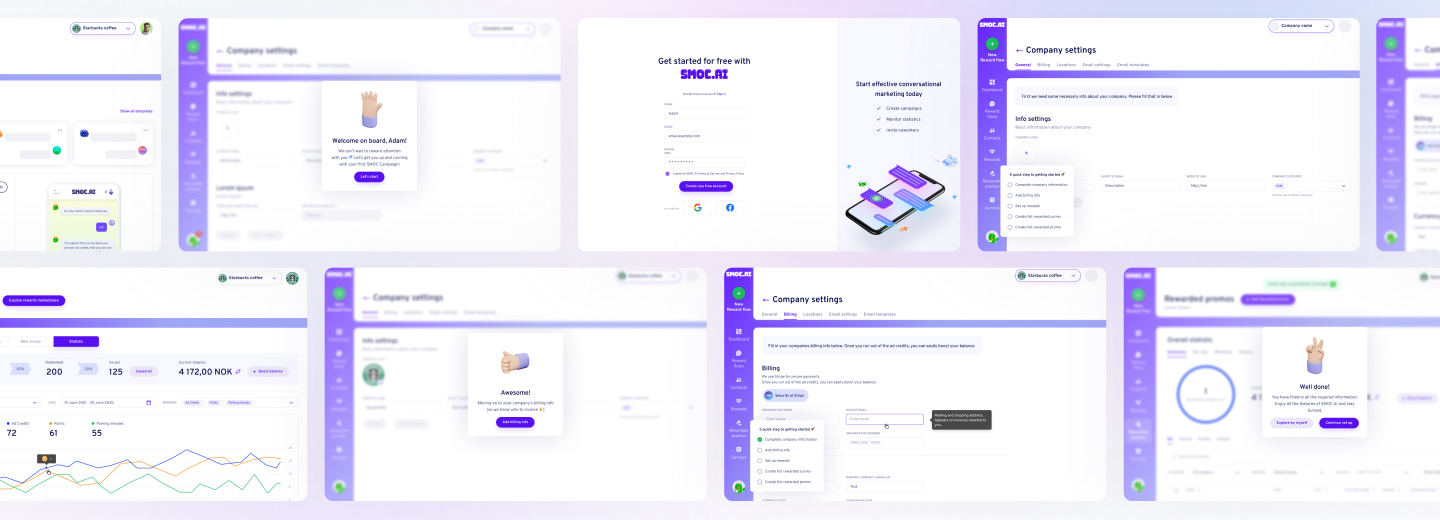
Scaling from Prototype into a User-Friendly and Conversational Marketing Platform
Expected outcomes from a SaaS discovery workshop
The best outcome is not a document set but better decision quality.
After a well-run workshop, stakeholders should be aligned on the problem, target users, MVP scope, technical direction, timeline range, and key risks. That alignment reduces churn during development and cuts down on costly reversals caused by late-stage confusion.
A second outcome is validated scope. The backlog is no longer just a list of ideas. It is a ranked set of choices based on user evidence, business goals, and technical feasibility. That makes sprint planning more realistic and keeps the team focused on outcomes instead of feature volume.
There is also a confidence benefit. Investors, leadership teams, and delivery partners can move forward faster when the team has a shared plan backed by research, prototype feedback, and documented tradeoffs. Confidence does not come from optimism. It comes from evidence.
Questions to ask before starting a SaaS discovery workshop
A workshop is only as strong as the questions it is built around. Before kickoff, teams should be clear about the unknowns they need to reduce.
A few of the most useful questions are:
- Who is the first customer segment we are targeting?
- What problem is painful enough to drive purchase or adoption?
- Which features are essential for activation and retention?
- What integrations are mandatory at launch?
- What compliance, security, or performance constraints apply?
- What evidence will define a go or no-go decision?
If a provider cannot explain what deliverables you will receive, what timeline is realistic, how assumptions will be tested, and how outputs will support delivery, the workshop is probably too shallow. The right discovery process should leave your team ready for sprint zero, not ready for another round of guesswork.

Need Checking What Your Product Market is Able to Offer?
EVNE Developers is a dedicated software development team with a product mindset.
We’ll be happy to help you turn your idea into life and successfully monetize it.
Conclusion
At EVNE Developers, discovery work is usually structured around five connected tracks: user research, market analysis, prototyping and validation, technology and architecture, and roadmap planning. That structure works well because it keeps business, product, design, and engineering in the same decision loop.
The process is intentionally cross-functional. Product stakeholders define goals and constraints. Business analysis checks feasibility and gaps. UX work shapes workflows and interfaces. Engineering reviews risk, architecture, and integrations. This reduces the common problem of each function creating its own version of the product plan.
The emphasis is on measurable outcomes. That means validating assumptions, pressure-testing the MVP, documenting non-functional requirements, and linking early release plans to product metrics. For regulated or technically complex SaaS products, that also means bringing compliance and security concerns into discovery rather than treating them as later-stage cleanup.
A product-first team also keeps discovery practical. Short, focused sprints, evidence-backed prioritization, and decision-ready artifacts tend to outperform long workshops with too many participants and too little synthesis.
A SaaS Discovery Workshop is a structured session designed to align stakeholders, define project goals, clarify requirements, and outline the scope for a SaaS (Software as a Service) product. It helps ensure all parties have a shared understanding before development begins.
Workshops can range from a half-day to several days, depending on project complexity and stakeholder availability. Most commonly, they last one to two days.
Essential participants include product owners, project managers, technical leads, UX/UI designers, and key business stakeholders. Involving decision-makers ensures alignment and accelerates the decision-making process.
Gather relevant documentation, define your business goals, identify key stakeholders, and prepare a list of questions or challenges you want to address during the workshop.

About author
Roman Bondarenko is the CEO of EVNE Developers. He is an expert in software development and technological entrepreneurship and has 10+years of experience in digital transformation consulting in Healthcare, FinTech, Supply Chain and Logistics.
Author | CEO EVNE Developers