

 0
0

Most early product teams do not fail because they picked the wrong tech stack. They fail because they built the wrong thing, in the wrong order, for the wrong reason.
That is why the debate around MVP vs prototype vs proof of concept matters so much. These three artifacts are often treated like synonyms, yet each one is built to answer a different risk question. If you use the wrong one first, you can burn months of runway and still learn very little.
The simplest rule is this: start with the smallest test that can answer your biggest unknown with credible evidence.
WHAT'S IN THE ARTICLE
MVP vs prototype vs proof of concept definitions
A proof of concept, a prototype, and an MVP sit at different points on the path from idea to product. They may look related, but they are not interchangeable.
A proof of concept asks whether the core idea can work at all. It is mainly about technical feasibility. A prototype asks how the product should work for a user. It is mainly about workflow, design, and usability. An MVP asks whether customers will actually use it, buy it, or return to it. That is market validation.
Here is the simplest way to separate them:
| Artifact | Main question | Risk reduced first | Typical form | Usually seen by |
| Proof of concept | Can this work? | Technical or scientific risk | Experiment, model, script, lab test, narrow pilot | Internal team, investors, partners |
| Prototype | How should this work? | UX, workflow, stakeholder alignment risk | Wireframes, clickable mockup, simulated flow, physical mockup | Users, product team, stakeholders |
| MVP | Will people use or pay for this? | Market, adoption, pricing, retention risk | Working product with limited scope | Early customers |
That distinction sounds simple, yet many teams still build a polished prototype when the real issue is technical feasibility, or rush into an MVP when the UX is still unclear.

Looking to Build an MVP without worries about strategy planning?
EVNE Developers is a dedicated software development team with a product mindset.
We’ll be happy to help you turn your idea into life and successfully monetize it.
Product risk comes before product format
The right first step depends less on what you are building and more on what could kill the idea fastest.
Side-by-side comparison of proof of concept, prototype, and MVP by the main question each answers and the risk each reduces first.
If the business depends on a hard technical claim, you need evidence that the claim is true. If the product depends on a new workflow, you need to see users react to it. If the concept is easy to build but demand is uncertain, you need market behavior, not opinions.
A practical way to frame it is:
- Can we make it work?
- Will people understand it?
- Will people use it or pay for it?
Each question maps to a different first move.
- Proof of concept: technical feasibility
- Prototype: usability and workflow
- MVP: market demand and behavior
Teams that get this right usually save money twice. First, they avoid building too much. Second, they avoid learning too late.
When to choose the particular approach
When a proof of concept should come first
A proof of concept should come first when failure of the core technology would make the business nonviable. This is common in AI-heavy products with hard performance claims, regulated software with security or compliance constraints, deep tech, medtech, biotech, and hardware.
In those cases, a clean interface or even a small working app may not matter if the engine behind it cannot perform. A prototype of a clinical workflow does not help much if the diagnostic model is not accurate enough. A simple MVP for a new battery platform is not useful if the chemistry does not hit the required cycle life.
Proofs of concept are often narrow by design. They are supposed to test one hard thing, not many soft things.
Typical signals that a PoC should come first include:
- Core claim: the business relies on a technical breakthrough
- Regulatory gate: evidence is needed before broader product work makes sense
- Partner scrutiny: investors or enterprise buyers need hard feasibility proof
- High build cost: full product work would be expensive to unwind later
This is why deep tech teams often move in a PoC → prototype → MVP sequence. There is no value in compressing the process if the hardest risk has not been reduced.
When a prototype is the right first build
A prototype should come first when the underlying build is relatively straightforward, but the user flow, interaction model, or product shape is still uncertain.
This is common in SaaS, internal workflow tools, fintech experiences, health apps, and marketplaces. In those categories, it is often less risky to test screens, steps, and decision points before writing production code.
A prototype can be low fidelity or high fidelity. A rough sketch can be enough to test whether a user grasps the logic. A clickable mockup can show where a flow breaks, where trust drops, or where a user hesitates. What matters is not polish. What matters is whether the prototype generates clear feedback.
A prototype is especially useful when teams need to answer questions like these:
- Is the onboarding flow obvious?
- Does the value proposition make sense in context?
- Are users choosing the intended path?
- Do stakeholders agree on what should be built?
Prototype work is fast because it is disposable. That is a strength, not a weakness.
Teams often get strong gains from prototyping when they need to test multiple concepts quickly, align founders and stakeholders, or prevent engineering from coding the first idea that sounds good in a meeting.
When an MVP should come first
An MVP should come first when demand is the biggest unknown and the product can be built or delivered with reasonable effort.
This is usually the case for straightforward software products, focused SaaS tools, service-backed startups, and market tests where the problem is already clear. If the tech is not novel and the user flow is familiar, it can be smarter to put a minimal working version in front of real users and measure behavior.
That behavior matters more than interview enthusiasm. People may praise a prototype and still never return. They may say they would pay and then vanish at checkout. An MVP closes that gap by testing real use, real friction, and real value.
Good MVPs do not need full automation or a large feature set. Many strong MVPs are narrow, manual behind the scenes, or limited to one segment. What they do need is enough quality to produce valid learning.
A strong MVP usually tests one or more of these business questions:
- Adoption: will target users sign up and activate?
- Retention: do they come back after the first use?
- Value: do they complete the key task successfully?
- Monetization: will they pay, upgrade, or accept a paid pilot?
Classic examples follow this pattern. Early ecommerce tests validated willingness to buy before full operations were built out. Demo-driven launches validated interest before complex infrastructure was finished. The lesson is consistent: if market behavior is the hard unknown, ship the smallest thing that can measure it.
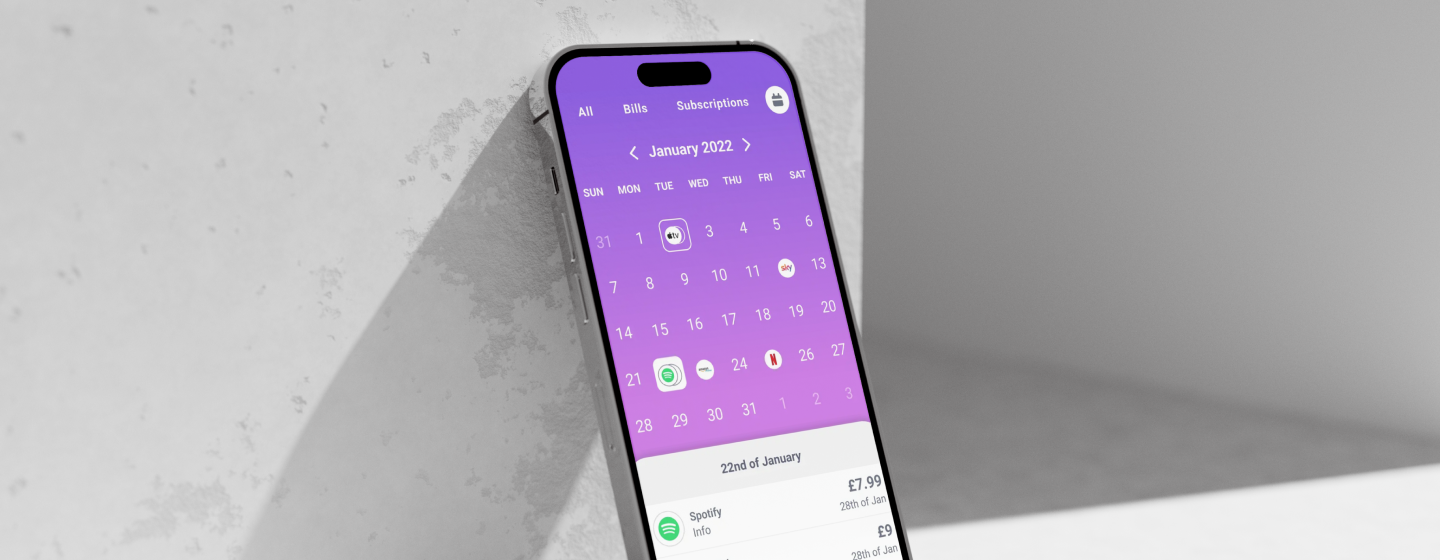
Proving the Concept for FinTech Startup with a Smart Algorithm for Detecting Subscriptions
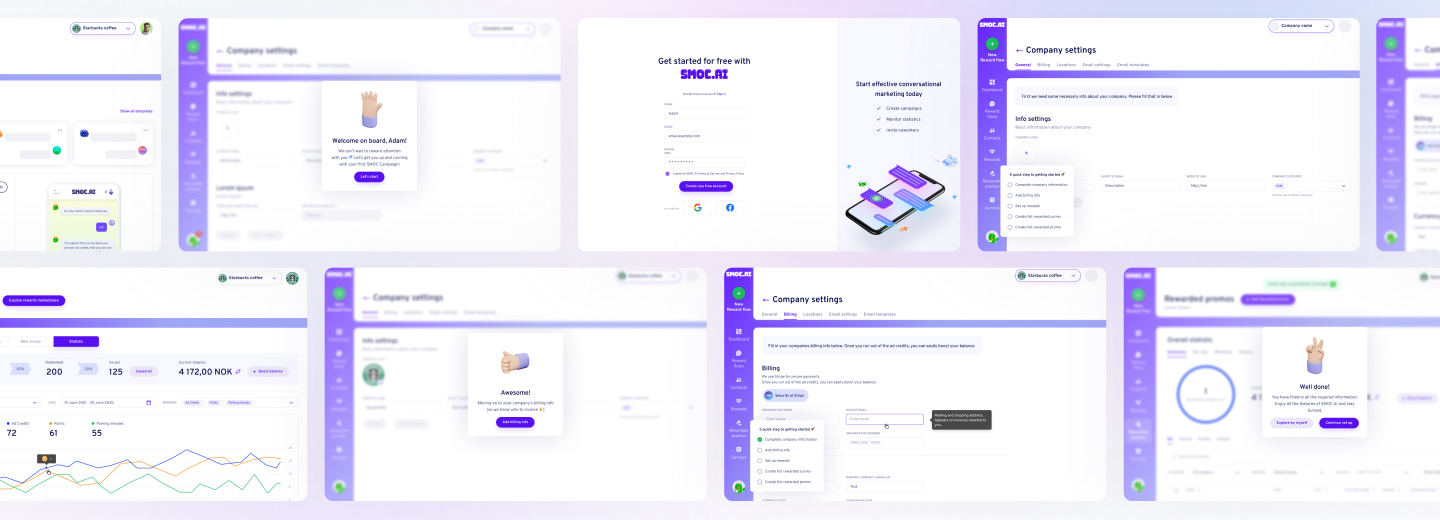
Scaling from Prototype into a User-Friendly and Conversational Marketing Platform
Common product sequencing patterns by product type
There is no single sequence that fits every company. Still, a few patterns appear again and again.
For deep tech, biotech, and hardware, the path is often slower at the front and safer overall. For SaaS, the path is usually shorter because technical feasibility is less likely to be the main blocker.
| Product type | Most common first step | Why it usually makes sense |
| Deep tech or biotech | Proof of concept | Technical feasibility can kill the idea early |
| Regulated digital product | Proof of concept or prototype | Feasibility and compliance risks often come before market scale |
| B2B SaaS with new workflow | Prototype | UX and stakeholder fit are often the main unknowns |
| Simple SaaS tool | MVP | Demand and retention matter more than feasibility |
| Marketplace or service-backed startup | MVP | Manual operations can test real behavior quickly |
Some teams compress steps. A SaaS founder may go from prototype to MVP in a few weeks. A research-heavy startup may spend months in PoC work before any customer-facing artifact exists. Both are reasonable if the choice matches the biggest risk.

Need Checking What Your Product Market is Able to Offer?
EVNE Developers is a dedicated software development team with a product mindset.
We’ll be happy to help you turn your idea into life and successfully monetize it.
Conclusion
When teams need a simple decision rule, one works well: identify the assumption that would cause the most damage if it were wrong, then choose the cheapest artifact that can test it with believable evidence.
This sounds obvious, but it forces discipline. It shifts the conversation from “What should we build?” to “What do we need to prove next?”
A useful sequence looks like this:
- List the top three risks blocking the business.
- Rank them by business impact and cost of being wrong.
- Match the top risk to the right artifact.
- Define the pass or fail signal before work starts.
- Move to the next artifact only after the current risk is reduced enough.
One sentence can guide the choice:
If the question is technical, build a proof of concept. If the question is experiential, build a prototype. If the question is commercial, build an MVP.
Highlighted quote stating that technical questions need a proof of concept, experiential questions need a prototype, and commercial questions need an MVP.
For many software teams, the smartest path is prototype first, then MVP. For complex or regulated products, PoC first is often the safer call. The right order is the one that cuts risk fastest, not the one that sounds most impressive in a pitch deck.
Your MVP should include only the essential features that solve the core problem for your target users. It should be stable, usable, and able to collect meaningful feedback, but it doesn’t need to be perfect or feature-complete.
Skipping stages increases risk. Each step serves a unique purpose: PoC validates feasibility, prototypes test usability, and MVPs validate market demand. Skipping any stage may lead to costly mistakes or missed opportunities.
Each approach allows you to test assumptions early, gather feedback, and make informed decisions before investing heavily in full-scale development. This minimizes wasted resources and increases the likelihood of product-market fit.
Yes, if your prototype is functional and addresses the core problem, you can iterate on it to add the minimum necessary features and transform it into an MVP.
About author
Roman Bondarenko is the CEO of EVNE Developers. He is an expert in software development and technological entrepreneurship and has 10+years of experience in digital transformation consulting in Healthcare, FinTech, Supply Chain and Logistics.
Author | CEO EVNE Developers