

 0
0

WordPress development costs can look confusing because the platform is “free,” yet real projects range from a few hundred dollars to well into six figures. After 10 years of building and rescuing web products, I’ve seen the same pattern repeat: the bill is rarely driven by WordPress itself. It’s driven by decisions about scope, risk, and the business outcomes you expect the site to deliver.
If you want a lower cost, you do not start by shopping for cheaper labor. You start by narrowing what “done” means, validating what actually moves revenue or adoption, and cutting hidden complexity before it turns into rework.
WHAT'S IN THE ARTICLE
What you’re really paying for (it’s not “WordPress”)
A WordPress website budget typically covers five buckets:
- Product thinking and requirements (what the site must do, how success is measured)
- Design (brand expression, usability, accessibility)
- Build (theme, plugins, custom code, integrations)
- Content (copy, images, migrations, SEO structure)
- Operations (hosting, security, maintenance, monitoring)
A $2,000 site and a $40,000 site can both “be WordPress.” The difference is how much custom behavior you need, how much traffic and performance you plan for, and how expensive failure would be.
Cost ranges you can expect (with real-world line items)
The table below shows typical ranges seen across startups and established businesses. Your numbers will shift based on complexity, compliance needs, and how much you can provide in-house (copy, brand assets, product decisions).
| Site type | Typical budget range | What’s included | What’s usually missing (and later increases cost) |
| DIY with premium theme | $300 to $2,000 | Theme, basic pages, simple plugins | Quality copy, performance tuning, security hardening, analytics discipline |
| Freelancer build | $2,000 to $10,000 | Setup, theme config, a few templates, basic SEO | Robust QA, scalable content model, governance, documentation |
| Small agency | $8,000 to $35,000 | Design, custom templates, content migration, core integrations | Deep performance work, automation, advanced tracking, compliance review |
| Product team approach | $25,000 to $120,000+ | Discovery, design system, custom builds, measurable funnels, QA, CI/CD | Rarely missing much, but scope control matters |
A useful mental model: if the website is a marketing brochure, the lower tiers can work. If the website is a revenue engine (lead gen at scale, subscriptions, gated content, partner portals), cost shifts toward engineering discipline, analytics, and reliability.
The biggest cost drivers (and why they get expensive fast)
Cost grows when requirements create branching logic, exceptions, or long-term maintenance. These drivers show up on almost every over-budget WordPress project:
Content complexity is a silent budget killer. Many teams underestimate how long it takes to write, edit, approve, and format content in a consistent structure. Migration adds its own surprises (broken embeds, inconsistent headings, missing metadata).
Custom design and custom blocks raise costs because they require a system, not just a mockup. A one-off page can be designed quickly. A flexible library of components that editors can reuse without breaking layout takes more time, but it usually reduces future spend.
Integrations are where “simple websites” become software. CRM syncing, event tools, payment providers, identity, analytics stacks, and marketing automation all introduce edge cases and data mapping.
After a paragraph like that, here’s a quick way to spot the multipliers early:
- Custom post types and fields: More flexibility, more templates, more QA
- Editor experience: Clean block patterns reduce training and ongoing support
- Multi-language needs: Translation workflows, URL strategy, duplicated QA effort
- Search and filtering: Often needs indexing strategy and performance tuning
- Compliance requirements: Security controls, logging, retention, consent, audits
- Performance goals: Image strategy, caching, Core Web Vitals work, CDN setup
If you are in fintech, healthcare, insurance, or any domain with strict security expectations, the “operations” line becomes a first-class part of the scope. That is not optional work. It is risk management.
Typical budget tiers (and what you can realistically get)
It helps to map your expectations to a tier before requesting estimates.
After you know the goal of the site, you can think in tiers like these:
- Starter marketing site
- Growth site with conversion tracking
- Content platform with editorial workflows
- High-traffic, integration-heavy web product
Each tier can be done well or poorly. The difference is whether you pay now (planning, quality, instrumentation) or pay later (rework, security incidents, lost leads, slow pages).

Looking to Build an MVP without worries about strategy planning?
EVNE Developers is a dedicated software development team with a product mindset.
We’ll be happy to help you turn your idea into life and successfully monetize it.
How to make WordPress development cheaper without making it worse
Lowering cost is about removing uncertainty and avoiding customization that does not buy you measurable results.
Start with discovery that is short, practical, and metrics-focused. A tight discovery phase often reduces build cost because it eliminates ambiguous requirements. When EVNE Developers approaches WordPress or any web product, the aim is to connect features to measurable outcomes (lead quality, conversion rate, trial starts, demo requests), then build the smallest version that can prove the model.
Template reuse is not a compromise when it is used intentionally. Many sites only need 6 to 10 core templates and a well-defined block system. That keeps design and development time contained and makes future pages cheaper.
Reduce plugin sprawl. Plugins feel like a shortcut, yet every plugin adds update risk, performance overhead, and compatibility testing. A lean set of well-reviewed plugins, paired with small amounts of custom code where it pays off, often lowers the 12-month total cost.
A cost-lowering checklist that still protects outcomes:
- Define “MVP pages” up front: Home, one key landing page, pricing, contact, legal
- Limit design variants: Fewer unique layouts means fewer bugs and faster edits
- Standardize forms: One form system integrated with your CRM, not five different ones
- Plan content operations: Who writes, who approves, who publishes, and when
- Measure what matters: Events tied to funnel steps, not vanity traffic only
If your team can provide clean content, brand assets, and fast feedback cycles, you will cut agency time dramatically without cutting quality.
Where cheap WordPress builds tend to fail (and what that costs later)
Security and maintainability are the two areas where “budget” decisions create the most expensive reversals.
A low-cost build may ship with excessive plugins, no staging environment, weak roles and permissions, and no update plan. That can lead to downtime, hacked pages, SEO damage, and emergency rebuilds that cost more than doing it properly in the first place.
One sentence that belongs in every budget conversation: a WordPress site is not a one-time purchase, it’s an operating system for your marketing and content.
What PCI expects in practice (and what it looks like in a SaaS platform)
PCI DSS is organized around goals like securing networks, protecting card data, managing vulnerabilities, controlling access, monitoring, and maintaining security policies. For a fintech SaaS team, these turn into very concrete engineering and operations work.
A typical PCI-ready implementation includes:
- Network isolation: Segmented environments so the CDE is separated from general workloads
- Strong encryption: TLS in transit, strong cryptography at rest where applicable, disciplined key management
- Access control: Least privilege, MFA for admins, role-based access control for staff tools
- Secure SDLC: Code review discipline, dependency scanning, secrets handling, and change control for in-scope systems
- Monitoring and evidence: Centralized logs, alerting, retention, and the ability to prove what happened when
PCI is not only about technology. Auditors and procurement teams look for repeatable processes that survive team growth and fast release cycles.
The operational cadence founders should budget for
PCI is often pitched as an annual event, yet the workload is spread across the year. If you treat it as a once-a-year scramble, you will pay for it in engineering interruptions and missed sales timelines.
A realistic cadence includes quarterly external vulnerability scans, periodic access reviews, continuous patching, routine log review, annual penetration testing, and keeping documentation current as architecture changes.
Here is a founder-friendly way to frame it: PCI is a product quality system for payment security. If it is not in the product roadmap, it will show up as an emergency.

Proving the Concept for FinTech Startup with a Smart Algorithm for Detecting Subscriptions
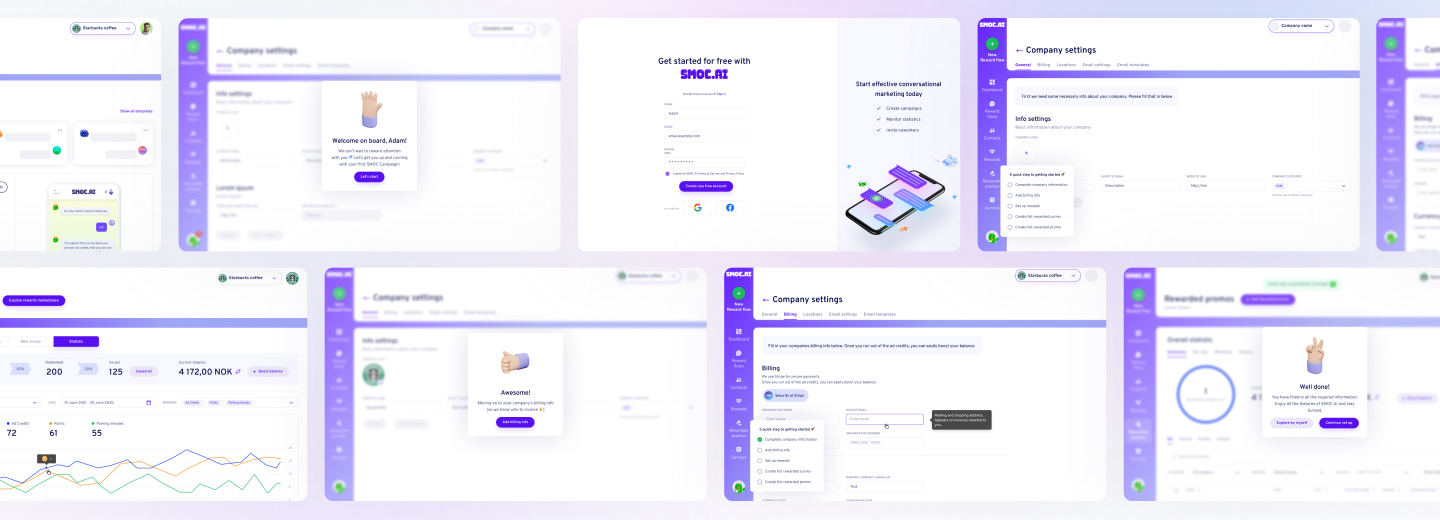
Scaling from Prototype into a User-Friendly and Conversational Marketing Platform
A simple budgeting framework that avoids surprises
If you want estimates that hold up, the inputs have to be real. That means describing the problem, not just listing pages.
Start by writing a one-page brief: audience, offer, primary conversion action, integrations, compliance needs, and a short list of “must have” versus “can wait.” Then you can budget with fewer assumptions and fewer padded buffers.
A practical framework used by many product teams:
- Identify the primary conversion goal and one secondary goal.
- List the required templates and content types, not the total page count.
- Decide which integrations are truly required for launch.
- Set non-negotiable constraints (performance, security, accessibility, compliance).
- Split delivery into launch and post-launch increments with measurable targets.
This approach lowers cost because it reduces rework. Rework is what makes WordPress feel “unexpectedly expensive.”
Pricing models: what you’re buying (and what to watch)
Different engagement models shift risk between you and the vendor.
Fixed-price can work when requirements are stable and the vendor is strict about change control. It often becomes expensive when the brief is vague, because the vendor has to price risk.
Time and materials fits discovery-led work and complex integrations, since you can reprioritize without renegotiating the entire contract. You still need tight weekly planning and clear acceptance criteria.
Dedicated team models can be efficient when the website is part of a larger growth roadmap (new landing pages monthly, ongoing experiments, SEO work, new integrations). You pay for capacity and get continuous delivery, which tends to lower long-term cost per release.
If you have a site that is already struggling, a “project rescue” approach can be the cheapest path even if it sounds counterintuitive. Auditing architecture, plugin footprint, security posture, and build quality early can prevent a full rebuild.
Questions that quickly reveal whether a quote is realistic
You do not need to be technical to vet a WordPress estimate. Ask questions that force clarity.
Ask how performance will be validated (Core Web Vitals targets, test tools, acceptance thresholds). Ask what the update and security model is (who patches, how often, what happens when a plugin breaks). Ask how analytics will be implemented (events, funnels, dashboards, and who owns the definitions). Ask what the content model looks like inside the CMS, because that determines how painful publishing becomes.
If a vendor cannot explain these simply, expect hidden costs later.

Need Checking What Your Product Market is Able to Offer?
EVNE Developers is a dedicated software development team with a product mindset.
We’ll be happy to help you turn your idea into life and successfully monetize it.
Conclusion
Most cost overruns start before development begins, when teams request pricing with incomplete inputs. If you want a number you can take to finance with confidence, send:
- Current site URL (or competitor examples if it’s new)
- A sitemap or a list of templates and content types
- Brand assets and any existing design guidelines
- Integrations list (CRM, email, payments, identity, analytics)
- Launch deadline and what “phase 1” can exclude
- Compliance constraints (GDPR, HIPAA, OWASP targets, internal security policies)
At EVNE Developers, teams often get the best cost outcomes when they treat the website like a product: short discovery, clear metrics, MVP scope, and tight iterations. If you share the details above, it becomes possible to identify the few items that drive 80 percent of cost and decide which ones belong in launch versus later increments.
If you want, send your current site (or a short brief) and the target outcome you care about most. You will get a grounded estimate, a scope map that shows where costs actually come from, and options to reduce spend without sacrificing performance, security, or conversion.
Several factors impact the overall cost, including the complexity of the design, the number of pages, required features (e-commerce, booking systems, membership areas), choice of themes and plugins, custom development needs, content creation, SEO optimization, and ongoing maintenance.
Using a pre-built theme is generally more cost-effective and faster to launch. Custom themes, while more expensive, offer unique branding and tailored functionality. The choice depends on your business goals, budget, and desired user experience.
Hidden costs can include premium plugins, ongoing maintenance, security updates, hosting fees, domain registration, backup solutions, and potential costs for troubleshooting or future upgrades.
Investing in professional development ensures a secure, scalable, and high-performing website tailored to your business needs. It can save you time, reduce risks, and deliver better ROI in the long run.

About author
Roman Bondarenko is the CEO of EVNE Developers. He is an expert in software development and technological entrepreneurship and has 10+years of experience in digital transformation consulting in Healthcare, FinTech, Supply Chain and Logistics.
Author | CEO EVNE Developers